<img height="1" width="1" style="display:none" src="https://www.facebook.com/tr?id=395330474421690&amp;ev=PageView&amp;noscript=1">
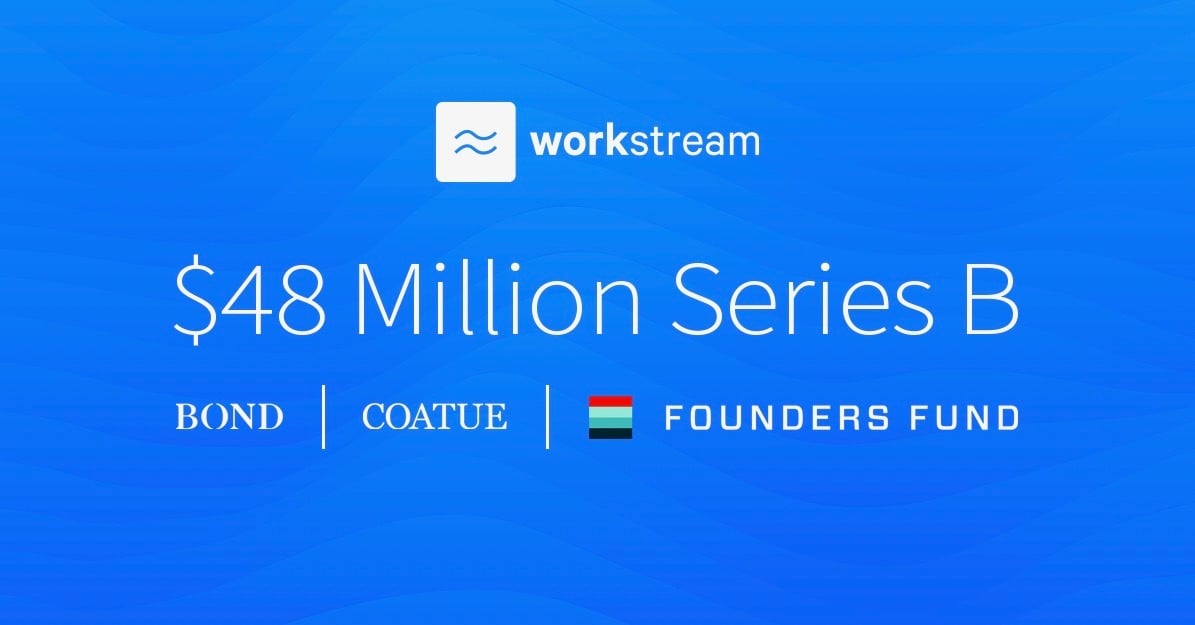
Workstream Raises $48M Series B to Help Businesses Hire
Workstream Blog

Workstream Raises $48M Series B to Help Businesses Hire

By Desmond Lim

Get the latest with Workstream

Always stay current with hiring news by subscribing to our email updates

We are thrilled to announce that Workstream has raised $48 million in Series B funding. This is a major milestone for the companyβ€”and the deskless workforce. 

In July 2021, we helped local businesses fill more than 18,700 jobs, which represents more than 2.5% of all private jobs added in America. Over the past year, we grew 10x and now serve more than 1,500 customers across 10,000 locations, including Jimmy John’s, Jamba, Wingstop, IHOP, Chick-fil-A franchisees and more. We are humbled by our customers’ results and are committed to their success.

The round, which now brings the total investment in Workstream to $60.5 million, was co-led by BOND and Coatue, with significant reinvestment from Founders Fund. Through this series, we also:

  • Expanded the list of investors in Workstream, which now includes CEO of Zoom (Eric Yuan), CEO of DoorDash (Tony Xu), CEO of Qualtrics (Ryan Smith), CEO of Logitech (Bracken Darrell), CEO of Affirm (Max Levchin), COO of Okta (Frederic Kerrest), CEO of Figma (Dylan Field), CEO of Plaid (Zach Perrett), CEO of Carta (Henry Ward), CEO of Front (Mathilde Collins), CEO of StockX (Scott Cutler), CEO of Lattice (Jack Altman), COO of Yelp (Jed Nachman) and more
  • Welcomed returning investors, including Basis Set Ventures, CRV, Peterson Ventures and GGV Capital 
  • Added Jay-Z’s RocNation, Will Smith’s Dreamers VC, Andre Igudoala, James Harden and Joe Montana’s Liquid 2 Ventures as part of our shared mission to empower local businesses and communities
  • Appointed Jay Simons, General Partner at BOND and former President at Atlassian, to join existing board member Keith Rabois, General Partner at Founders Fund and former COO of Square, as an observer on Workstream’s board

Workstream’s mission is to empower local businesses and deskless workers to do better work. Because current economic conditions continue to make it difficult for you to staff up and for hourly workers to find jobs, we published an exclusive bookβ€”The Practical Guide To Hiring Hourly Employeesβ€”that we’d like to send you to thank you for your support. 

WS-Ebook cover

Having spoken to thousands of local businesses since our founding in late 2017β€”from the owners of a local cafe like Coupa Cafe to the franchisees of Jambaβ€”I am humbled by your relentless drive to build and create, and your contribution to our local communities. Local businesses are the bedrock of America, and create approximately two-thirds of net-new jobs in the United States. There are more than 5 million small businesses and more than 100 million workers in the United States who work for the companies you lead. The role you play in our economy is incredible.

Local businesses, unfortunately, have fallen behind in terms of the tools they have to recruit, onboard, manage and engage their hourly employeesβ€”especially in the mobile-first world where hourly workers have moved away from email and paper applications to using text as a main mode of communication. 

β€œNow, more than ever, local businesses need technology on their side to help them find and hire hourly workersβ€”quickly and efficiently,” said Keith Rabois, former COO of Square and General Partner at Founders Fund. β€œ (2) (1)

β€œNow, more than ever, local businesses need technology on their side to help them find and hire hourly workersβ€”quickly and efficiently,” said Keith Rabois, former COO of Square and General Partner at Founders Fund. β€œ (3)-1-1

As a former restaurant owner, I saw the challenges of hiring, managing and engaging hourly workers and the lack of tools and technology to run my business. I also saw the technology gap for deskless workers when I was a kid, sitting next to my dad (also an hourly worker) in his van and helping him deliver food each morning. Over the past 20 years, a lot of software and tools have been built for the office and technology worker. There has been, however, a huge lack of modern software to help local businesses. So, we started Workstream. We set out to solve this by providing local businesses the technology they need to hire and manage the best talent, grow faster and stay competitive.

dan rose workstream investor

Each milestone we’ve reached as a company has been possible because of our amazing customers, partners, investors and team membersβ€”and this one is no different. Thank you for your trust and support!
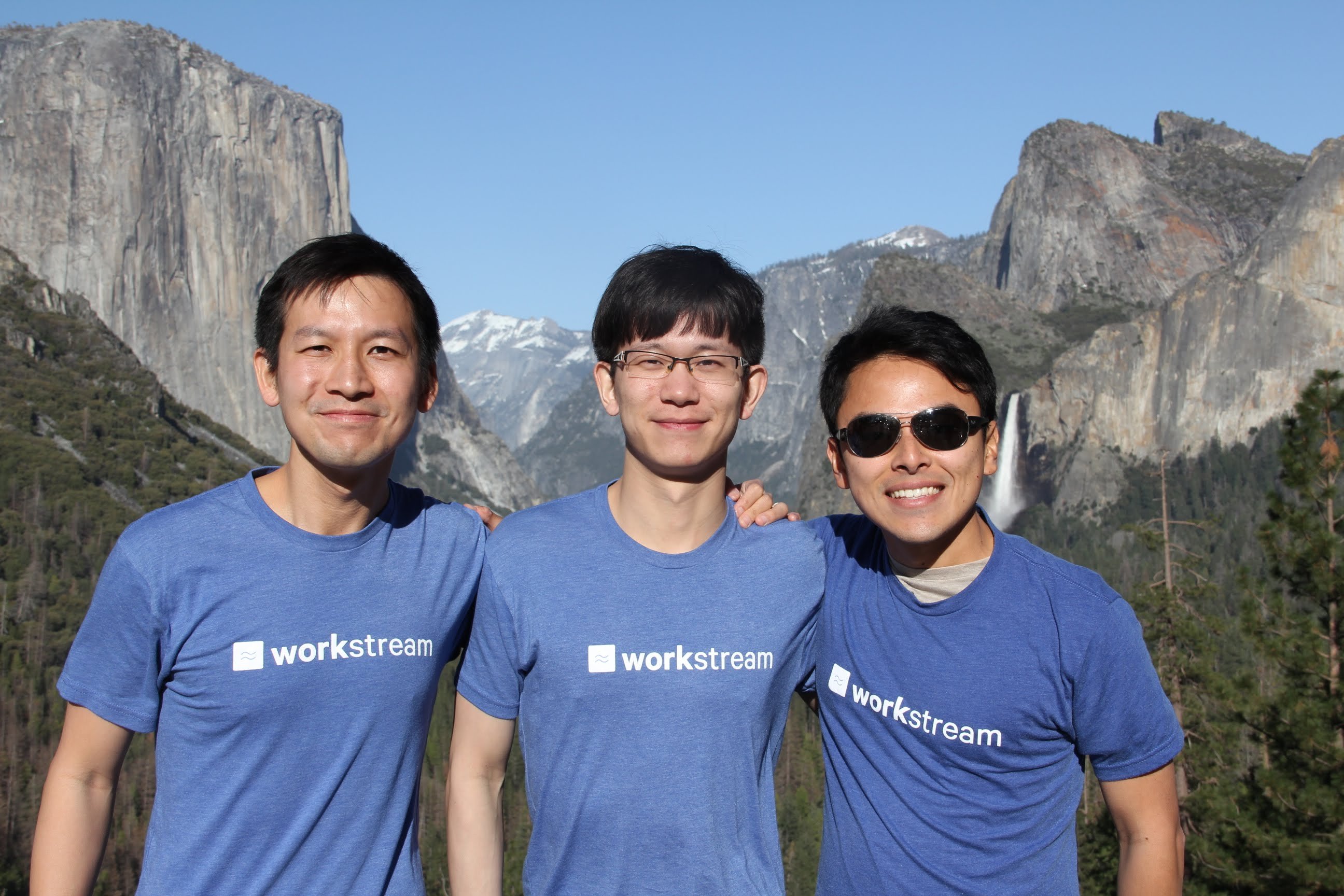
workstream founders desmond lim max wang and lei xu

From left to right, Desmond Lim (CEO & Cofounder of Workstream), Max Wang (CTO & Cofounder of Workstream), Lei Xu (CPO & Cofounder of Workstream)

workstream utah team

The Utah Team

workstream banner in utah office

Workstream banner in the Utah Office

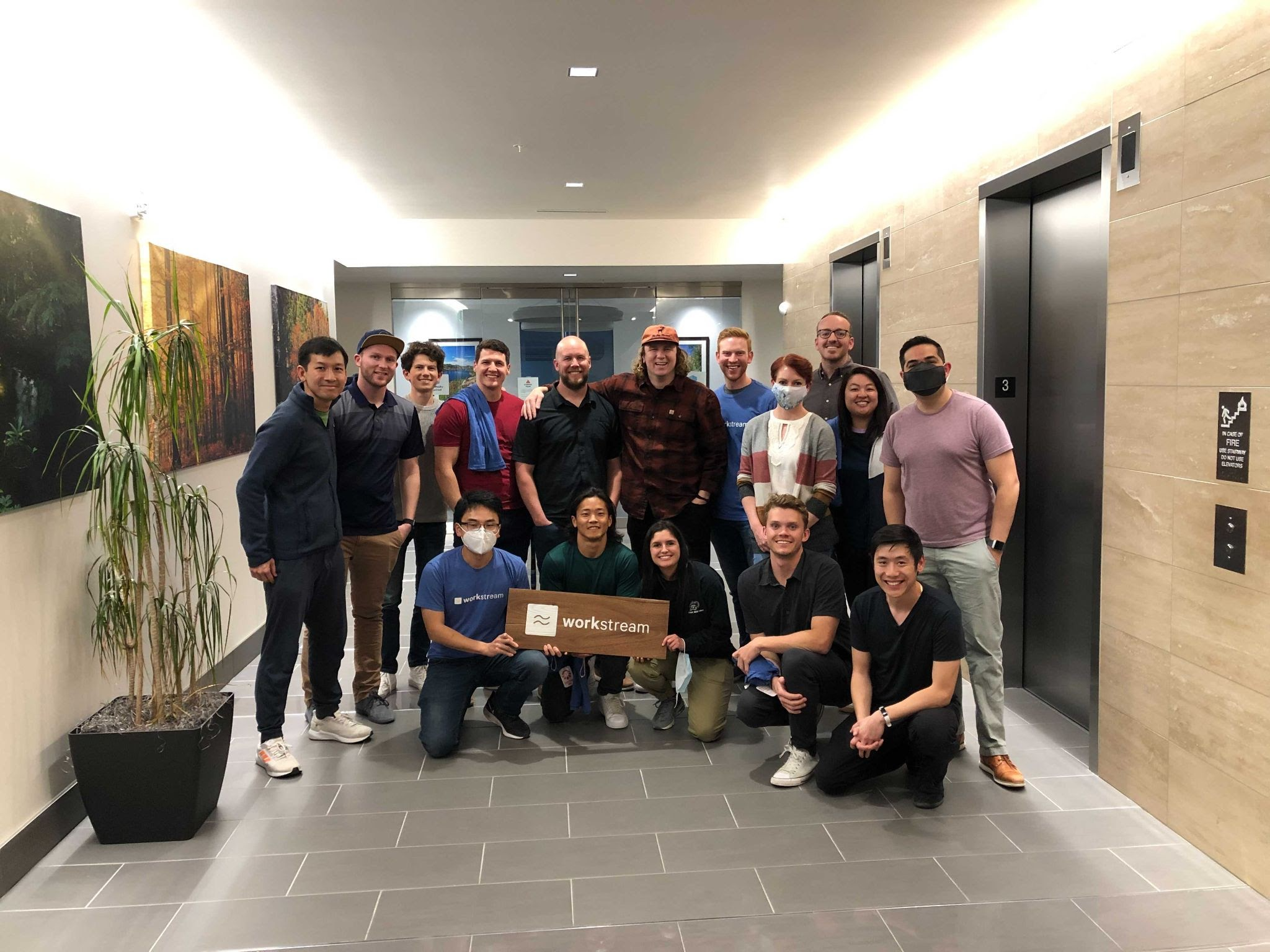
workstream team

Celebrating Workstream's new office opening

By Desmond Lim
Desmond Lim is co-founder and CEO of Workstream, a text-based hiring platform for local businesses hiring hourly workers. He is a graduate of Harvard University and MIT Media Lab, former Product Manager at WeChat, and investor at Dorm Room Fund. He contributes to Entrepreneur.com, Workstream Blog, and Huffington Post. He splits his time between San Francisco and Utah, and represented the Singapore National Team in basketball.

Personal Information and Sensitive Personal Information

Before we discuss the right to limit and the right to opt-out, we must first define personal information and how it relates to sensitive personal information.

Personal information is any data that identifies, relates to, or could reasonably be linked to you or your household. A few examples of personal information include:

  • Name or nickname
  • Email address
  • Purchase history
  • Browsing history
  • Location data
  • Employment data
  • IP address
  • Profiles businesses create about you, including pseudonymous profiles (β€œuser1234”)
  • Sensitive personal information

Sensitive personal information or β€œSPI” is a subset of personal information, defined as:

  • Identifying information (e.g. social security number, driver’s license)
  • Financial data (e.g. debit or credit card numbers)
  • Precise geolocation (within a radius of 1,850 feet)
  • Demographic or protected-class information (e.g. race/ethnicity, religion, union membership)
  • Biometric and genetic data (e.g. fingerprints, palm scans, facial recognition)
  • Communications and content (e.g. mail, email, text messages)
  • Health and sexual orientation (e.g. vaccine records, health history)

Right to Opt-Out

Californians have the right to opt-out of the sale and sharing of their personal information. That means you have the right to opt-out of the sale of your personal information to third parties (e.g. data brokers, advertisers). You also have the right to opt-out of the sharing of your personal information to prevent the targeting of ads across different businesses, websites, apps, or services.

CCPA-covered businesses must provide a link to allow you to exercise this right. It is usually found at the bottom of a webpage and will say β€œdo not sell or share my personal information” or β€œyour privacy choices.” Sometimes businesses offer privacy choices through a pop-up window or form

To opt-out of the sale and sharing of your personal information, click on the link or use the toggle provided by the business and follow the directions. Doing this on every website you visit can feel burdensome, but to ease the burden you can automatically select your privacy preferences for every website by using an opt-out preference signal, or OOPS for short.

An OOPS is a user-friendly and straightforward way for consumers to automatically exercise their right to opt-out of the sale and sharing of their personal information with the businesses they interact with online. An OOPS, such as the Global Privacy Control. It can either be a setting on your internet browser or a browser extension. With an OOPS, consumers do not have to submit individual requests to opt-out of sale or sharing with each business.

Right to Limit

Californians also have the right to direct businesses to limit the use and disclosure of their sensitive personal information.

Businesses covered under the CCPA must provide a link on their website that allows you to request the limiting of your SPI, if they plan on using it in certain ways. That link will also typically be at the bottom of a webpage and will say: β€œlimit the use of my sensitive personal information” or β€œyour privacy choices.” Once you send this request, the business must stop using your SPI for anything other than to:

  • Provide requested goods or services
  • Ensure security and integrity
  • Prevent fraud
  • Maintain system functionality
  • Comply with legal obligations

Bringing it Together

In summary, the CCPA gives you the right to opt-out of the sale and sharing of your personal information and gives you additional rights to further limit the use and disclosure of your sensitive personal information.

When you exercise these rights together, you exert greater control in protecting your personal data which is important for your identity, safety, and financial health.

If you are on a business’s website and you can’t find the links to exercise your rights, remember to check their privacy policy. The privacy policy should tell you how you can exercise your rights under the law.

If you find your rights being violated, you can submit a complaint to CalPrivacy.

Next in the LOCKED series, we will explore the right to correct and right to know. Follow us on social media to get live updates or check back in one week for the next post.

Essential

Required to enable basic website functionality. You may not disable essential cookies.

Targeted Advertising

Used to deliver advertising that is more relevant to you and your interests. May also be used to limit the number of times you see an advertisement and measure the effectiveness of advertising campaigns. Advertising networks usually place them with the website operator’s permission.

Personalization

Allow the website to remember choices you make (such as your username, language, or the region you are in) and provide enhanced, more personal features. For example, a website may provide you with local weather reports or traffic news by storing data about your general location.

Analytics

Help the website operator understand how its website performs, how visitors interact with the site, and whether there may be technical issues.

Right to Limit Use of Sensitive Personal Information

You also have the right to limit how we use sensitive personal information (such as precise geolocation, financial data, etc.).

Your preference has been saved. We will not sell or share your personal information.