



Q&A with Kristen Laxgang, Co-Founder at Two Girlz Packing
Workstream Blog

Q&A with Kristen Laxgang, Co-Founder at Two Girlz Packing

By Workstream

Get the latest with Workstream

Always stay current with hiring news by subscribing to our email updates

Kristen is native to IL and the NW Suburbs where she lived with her Mom, Dad and older sister Liz. She grew up loving the outdoors, and was a swimmer from a young age through the beginning of high school.

Kristen graduated from Arizona State University in 2001 with a BS in Sociology of work and organizational development. Some of her first positions were in Hospitality, where she built upon her interpersonal skills and learned to connect with and accommodate people in business. 

Kristen is an innovative leader with an intense entrepreneurial drive. She has a proven history of forging strong relationships and managing key multimillion-dollar accounts in the publishing and hospitality industries. She was previously also the owner of a small virtual administrative business, Delegate It!, in her late twenties & early thirties.


Q: What is the biggest challenge you have met in your career?

Kristen: Learning how to be patient. I think that there are some startups that have early success and are able to grow their teams and expand quickly, but not every business is that way. We had really humble beginnings and It's difficult not to compare yourself to those businesses moving along faster, wanting to be like them so bad, and batting off the naysayers. I have learnt to give myself a break and be patient in awaiting the success of my business. I am also learning to celebrate the small successes along with the big ones.

Another challenge we had was undervaluing our service. It took us way too long to see that we are valuable, and that people were willing to pay our rates to make sure they were taken care of appropriately. Our clients are so appreciative of what we do for them, and almost always think we are worth every penny. 


Workstream's Recruiting Tip: 

Work towards scaling your team quickly, by optimizing your hiring processes. Consider the use of text-to-apply posters, where custom posters can be printed for display at popular locations. Visitors can easily scan the QR code, or simply text the number displayed to view all open positions.

Additionally, job board integrations will allow you to post to 25,000 job boards with a single click, saving time from copying and pasting to multiple job boards. AI can also be used to optimize your postings, maximizing your reach and putting your brand in front of 10x as many job seekers.


Q: How you would describe your company culture, and what are the superpowers of your team?

Kristen: Our company culture is impressive - our super power stems from the personality of our people. To work in this business, you have to have a personality that will jive with different ages, ethnicities, and situations. We work with the elderly, adults, children, fatally ill, collectors, young families with kids, animals, and the list goes on. We have a compassionate team that can understand someone's vulnerabilities, and comfort them in stressful times. We know when a client needs assurance, direction, encouragement, a laugh or a hug. It's priceless, in my eyes.
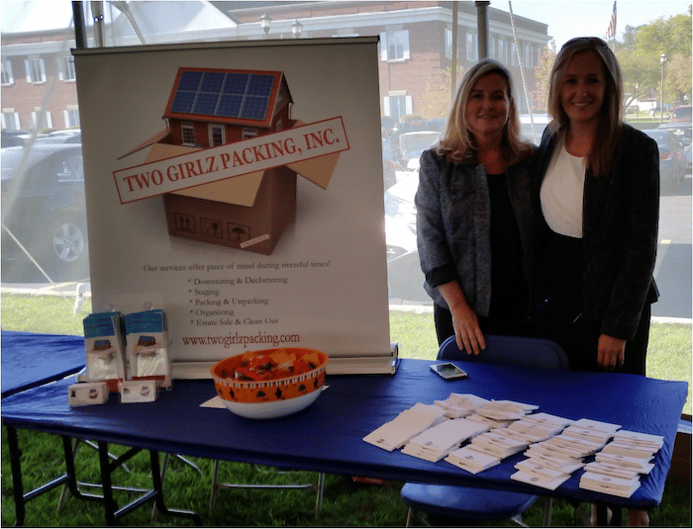
kristen laxgang from two girlz packing

Q: What are some challenges or trends you see in hiring today? 

Kristen: I know that it is near impossible to find people who are as passionate and driven in your business as you are, but it has been a struggle to even find individuals with compassion, interpersonal skills and are driven to work hard. For that reason, has also been difficult to scale this business. We have a great team, but we had to weed through a lot of people to find that great fit. 


Workstream's Recruiting Tip:

Video resumes are a quick, and efficient way to weed through candidates, and determine who has the right personality traits for your team. It is also an easy way to find out which candidate is genuinely interested in the position. Make filtering through resumes a little less painful, while also securing candidates that exhibit certain traits you’re looking out for based on what was mentioned in that short video.

You could also utilize smart screening, and automate scoring through multiple choice questions. Based on their answers, applicants will thereafter be filtered and only qualified candidates move forward to the interview.


Q: How would you describe your leadership style? 

Kristen: I have to admit I am a Type A personality mixed with a bit of OCD. However, I am reasonable about the expectations that I have. I know that nothing is ever perfect, and as long as you learn from a mistake, it isn't one. I am particular about everyone following our processes, it is the reason why we have been in business for nearly 7 years, with 0 insurance claims. 

I don't tolerate the mistreatment of anyone internally or externally. I am also light hearted, and a jokester. I like to have fun, reward people for their hard work, and take care of the most important part of our business, our clients. 

kristen laxgang

Q: Who inspires you and why?

Kristen: Jesse Itzler – he is fearless in business and is a true entrepreneur who knows that there is never a perfect time to do anything, you just have to jump in and figure things out sometimes. He is very aware of his mortality and, in turn, makes the most of each day of his life. I love that he has an intention to balance his life. He plans his year ahead of time so he can travel, have fun and still accomplish all the things he needs to do. He really motivates me to be a better human. 

I am also a big fan of Will Smith, and love his style of looking fear in the eye and just conquering whatever scares him. I love his work ethic, his passion for life and his belief that you can do anything you put your mind to. 

My parents are also a huge inspiration. They are in their 70s - super healthy, excited for life and always planning their next trip. They started with nothing, worked really hard and raised my sister and I. They have lost a daughter (my sister) in recent years, but really worked through it and figured out a way to still make the most of their life. Their strength is awe-inspiring and they have been amazing role models for me.

Q: Have you ever had an hourly job? If yes, please share with us your experience.

Kristen: Oh Yeah… I started working when I was 14 years old at the local pool, making $4.25 an hour. I worked at Subway in High School, for a construction company. I put myself through college working administrative jobs at restaurants, andeven cleaned my bosses house every other Friday to make extra money. 

I wasn't raised to be afraid of work. I enjoy it. You have to start somewhere and with each step you learn. I have had positive experiences at even the worst jobs, and I always make a point to take stock of all I have learned, what I like and don't like about those jobs to better shape what I want in my future.

scenic view

Contemplating ways in which you can grow your team, or hire quickly to scale your business? We can provide customized solutions based on your current strategies - schedule a call with us to find out more!

By Workstream
Workstream is the leading HR, Payroll, and Hiring platform for the hourly workforce. Its smart technology streamlines HR tasks so franchise and business owners can move fast, reduce labor costs, and simplify operations—all in one place. 46 of the top 50 quick-service restaurant brands—including Burger King, Jimmy John’s, Taco Bell—rely on Workstream to hire, retain, and pay their teams. Learn how you can better manage your hourly workforce with Workstream.

Personal Information and Sensitive Personal Information

Before we discuss the right to limit and the right to opt-out, we must first define personal information and how it relates to sensitive personal information.

Personal information is any data that identifies, relates to, or could reasonably be linked to you or your household. A few examples of personal information include:

  • Name or nickname
  • Email address
  • Purchase history
  • Browsing history
  • Location data
  • Employment data
  • IP address
  • Profiles businesses create about you, including pseudonymous profiles (“user1234”)
  • Sensitive personal information

Sensitive personal information or “SPI” is a subset of personal information, defined as:

  • Identifying information (e.g. social security number, driver’s license)
  • Financial data (e.g. debit or credit card numbers)
  • Precise geolocation (within a radius of 1,850 feet)
  • Demographic or protected-class information (e.g. race/ethnicity, religion, union membership)
  • Biometric and genetic data (e.g. fingerprints, palm scans, facial recognition)
  • Communications and content (e.g. mail, email, text messages)
  • Health and sexual orientation (e.g. vaccine records, health history)

Right to Opt-Out

Californians have the right to opt-out of the sale and sharing of their personal information. That means you have the right to opt-out of the sale of your personal information to third parties (e.g. data brokers, advertisers). You also have the right to opt-out of the sharing of your personal information to prevent the targeting of ads across different businesses, websites, apps, or services.

CCPA-covered businesses must provide a link to allow you to exercise this right. It is usually found at the bottom of a webpage and will say “do not sell or share my personal information” or “your privacy choices.” Sometimes businesses offer privacy choices through a pop-up window or form

To opt-out of the sale and sharing of your personal information, click on the link or use the toggle provided by the business and follow the directions. Doing this on every website you visit can feel burdensome, but to ease the burden you can automatically select your privacy preferences for every website by using an opt-out preference signal, or OOPS for short.

An OOPS is a user-friendly and straightforward way for consumers to automatically exercise their right to opt-out of the sale and sharing of their personal information with the businesses they interact with online. An OOPS, such as the Global Privacy Control. It can either be a setting on your internet browser or a browser extension. With an OOPS, consumers do not have to submit individual requests to opt-out of sale or sharing with each business.

Right to Limit

Californians also have the right to direct businesses to limit the use and disclosure of their sensitive personal information.

Businesses covered under the CCPA must provide a link on their website that allows you to request the limiting of your SPI, if they plan on using it in certain ways. That link will also typically be at the bottom of a webpage and will say: “limit the use of my sensitive personal information” or “your privacy choices.” Once you send this request, the business must stop using your SPI for anything other than to:

  • Provide requested goods or services
  • Ensure security and integrity
  • Prevent fraud
  • Maintain system functionality
  • Comply with legal obligations

Bringing it Together

In summary, the CCPA gives you the right to opt-out of the sale and sharing of your personal information and gives you additional rights to further limit the use and disclosure of your sensitive personal information.

When you exercise these rights together, you exert greater control in protecting your personal data which is important for your identity, safety, and financial health.

If you are on a business’s website and you can’t find the links to exercise your rights, remember to check their privacy policy. The privacy policy should tell you how you can exercise your rights under the law.

If you find your rights being violated, you can submit a complaint to CalPrivacy.

Next in the LOCKED series, we will explore the right to correct and right to know. Follow us on social media to get live updates or check back in one week for the next post.

Essential

Required to enable basic website functionality. You may not disable essential cookies.

Targeted Advertising

Used to deliver advertising that is more relevant to you and your interests. May also be used to limit the number of times you see an advertisement and measure the effectiveness of advertising campaigns. Advertising networks usually place them with the website operator’s permission.

Personalization

Allow the website to remember choices you make (such as your username, language, or the region you are in) and provide enhanced, more personal features. For example, a website may provide you with local weather reports or traffic news by storing data about your general location.

Analytics

Help the website operator understand how its website performs, how visitors interact with the site, and whether there may be technical issues.

Right to Limit Use of Sensitive Personal Information

You also have the right to limit how we use sensitive personal information (such as precise geolocation, financial data, etc.).

Your preference has been saved. We will not sell or share your personal information.