




Transcript:
|
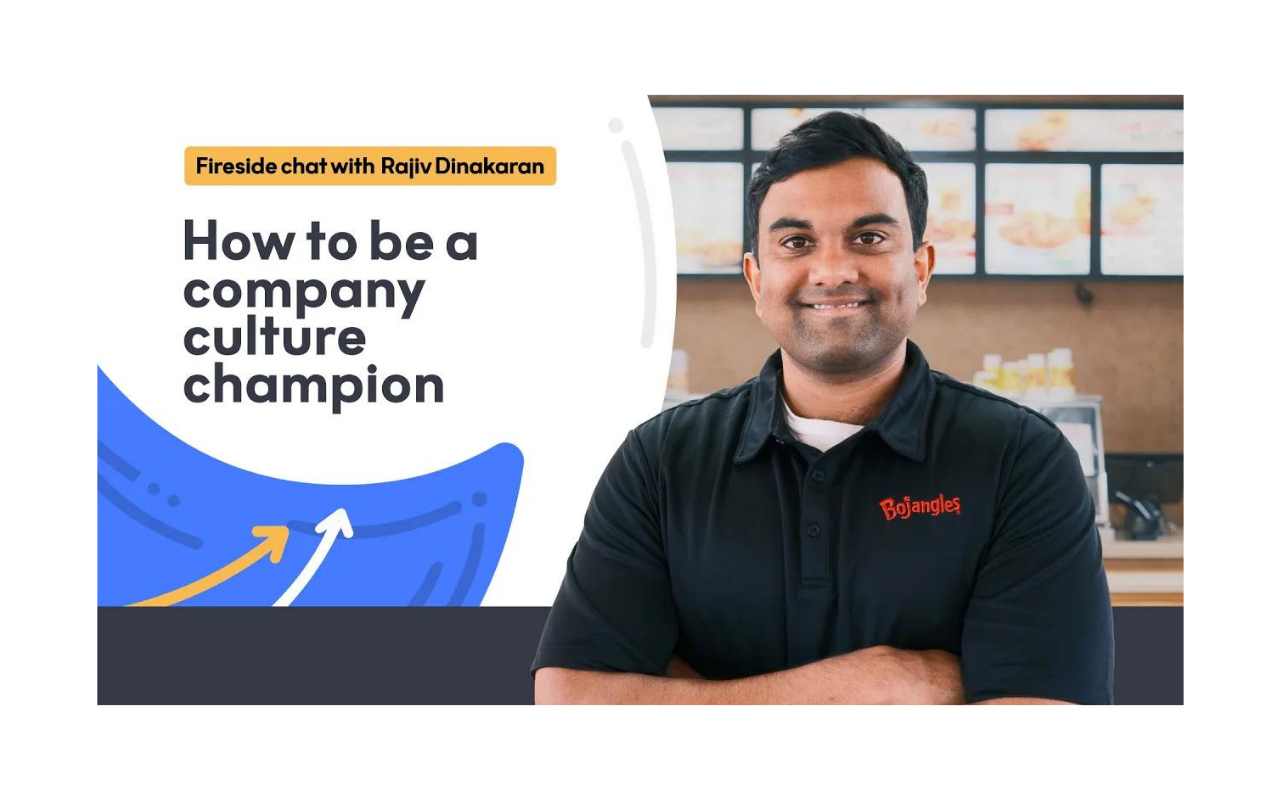
Amy Palmer (00:00): So we're here with Rajiv Dinakaran. I understand you have 41 Bojangles locations, which is really exciting. Thank you so much for speaking to us. We're so honored to be here. Honored to be with you. Rajiv Dinakaran (00:09): Excited to be here. Amy Palmer (00:10): Here. Can you tell me a little bit about your background and how that led to becoming a Bojangles owner? Rajiv Dinakaran (00:15): Yeah, of course. You know, I've been in the restaurant business my whole life. You know, I started working for my dad, who was also a Bojangles franchisee when I was in high school. You know, the summer times and, you know, weekends. I would just go as a regular crew member, team member, you know, bi go make biscuits, you know, I started out in the kitchen, you know, biscuits, dishes, kind of some of the back of the house, dirty chores. And I worked my way up and slowly, you know, each year as I progressed, I kind of moved up the ranks and slowly became you. Got to born, I was running shifts. And after college I, I started working with him full time and I was an assistant manager for a while and then I became a store manager for him. And eventually I was a district manager for him for a couple of years. (00:51): And then after in 2018, I bought my first location in Milledgeville, Georgia. It was a struggling location. It was on the verge of shutting down. Had actually seven employees. One of 'em being the owner who left. Obviously it's, it's a challenge for your, it's a challenge. And typically you need about 30 people to run one. Wow. It's about, takes about six, seven people a shift. And so was able to come in, turn around within 30 to 60 days. I was profitable, fully staffed, you know, opened my second location, exact same thing, you know, hit a homeowner that was doing well and then just slowly, you know, kinda snowballed from there. And then one more store came up for sale, took advantage of it two more and three more and just kind of just rolled from there. And then slowly from one to 41 here we are Amazing. Amy Palmer (01:33): What a journey. That's, Rajiv Dinakaran (01:34): It's been amazing. Yeah. Amy Palmer (01:35): I love that you did the whole back of house to front of house. Did you have a favorite back of house position Rajiv Dinakaran (01:39): Biscuits? I love making biscuits and this is a hot take, but I'm the best biscuit maker in our company. Amy Palmer (01:43): I believe it. <Laugh>. Yeah. Rajiv Dinakaran (01:44): So PE people sleep on me and they think that, you know, just 'cause I'm the owner now, I don't, I don't get back there, but I can go back there and I cannot roll. I can do it blindfolded and I'll take anyone on in this company <laugh>, if any of the corporate leadership is watching this, this is an official challenge. Oh my gosh, that's great. I'll out roll anyone. Amy Palmer (01:59): That's fantastic. So obviously there's a lot of hourly workers to manage and you have a lot of experience there. Tell me something about managing hourly workers that maybe other people don't know. Rajiv Dinakaran (02:10): You know, I think you gotta realize they're people too. And I think in this industry, you know, people treat them so poorly and they have no future. And they think it, you know, it's perceived as this sleazy kind of, you know, dead, no dead end job that's minimum pays minimum wage that you've got nowhere to go. And really I'm out on a mission to change that. You know, so many people in our executive leadership team were people who are crew members that kind of grew up in the ranks just like us. You know, Jeremy Collins, our VP of ops, you know, when I started working with my dad, he was a store manager. And prior to that for my dad, he was a, a, you know, high school kid. And so he's grown up and now he's kind of our number two in command and operation manages our whole operation teams. And so, you know, you know, things like that. I think people want to see and they want to know that this is more than just a paycheck, you know, it's a family, it's a, it's an environment and it's a potential career. Amy Palmer (02:57): Yeah, true career growth. Yeah. You, you've exemplified that. Yeah. That's incredible. We hear a lot about how Gen Z workers especially tend to prioritize a company's culture, maybe more so than other generations. Its mission, its culture, it needs to be values aligned. Is that something that you've experienced with Gen Z? Rajiv Dinakaran (03:13): Absolutely. And they, they, they wanna know they're working for something more. You know, it is more than just a paycheck for them. They want to have that feel good feeling that they're doing something productive and they wanna wake up with, Hey, I want to go to work today. And they want to be proud of where they work. You know, they don't want it to be kind of a dingy beat up, you know, bad service, stereotypical, you know, fast food experience. They wanna be part of a winning team. And I think, you know, work stream has really helped us kinda exemplify that with our kind of recruiting efforts and our HR efforts and the seamlessness of it. They kind of get that, they get a hint of that before they apply and once they apply and doing the system, they fully understand it. Amy Palmer (03:46): Yeah. What, what strategies have you done differently with your recruiting and your retention efforts with this new focus for Gen Z? Rajiv Dinakaran (03:53): I think first, you know, we were very quick to move. So when we added work stream, we were getting a ton of application flow. And so then the mission be, you know, how fast can we get them on in our system? 'cause Everyone was hiring, right? And so someone applied for a job at 9:00 AM by 10:00 AM they could be potentially hired. And so then it's about what do we resources can we add to our people to make it so we can, you know, access more people. That's when I hired Heather, who is our director of people and culture. And so one of the first things she did was as soon as she got on board, every single store that had a person apply, she would screen them. And if she felt like it was a good candidate at any level, she would set up the interview with the manager and just she, you know, so we would get quick touches to people. So within minutes of them applying, they were getting some sort of communication feedback. Even if it's, Hey, we got your application, we save it on file, we'll let save it, let you know something opens up to, or Hey, can you come in tomorrow at noon for an interview? And so I think that quickness really kind of impressed people. Amy Palmer (04:45): That's great to hear. And tell me a little bit, why do you, you're clear, you're so invested in the Rajiv Dinakaran (04:49): Culture of Amy Palmer (04:50): The company is wonderful to hear and you really have a mission for the what you're trying to get out there. Tell me a little bit more about why you personally care so much. I mean, about the culture of the company. You spoke to it a little bit, but really why is it so meaningful? Rajiv Dinakaran (05:00): It's, it's everything. It's our strength, it's who we are, right? So people, again, like people want to know, you know, they're working for something more than there's a paycheck. And our culture exemplifies that, right? They know that we care, they know there's opportunity here. They know that they can make a career with us. They're living here. There's benefits here. You know, they're just not a number, they're not employee 45 with Code Z, right? They're just somebody, they're, they're, they're Crystal, they're Jeremy, you know, they're people with us. And I think we've really done a good job of, you know, exemplifying that throughout our 41 locations. I know all the managers, I know several, you know, crew members, employees by names, birthdays, and they know me well personally as well too. So we've got this really tight knit bond that I think really kind of sets us apart. Amy Palmer (05:39): That's fantastic. It's, it's evident how proud you are and what it amazing culture. You've, Rajiv Dinakaran (05:43): I congratulations. I I very much am. Thank you. Amy Palmer (05:46): So what's been the most successful thing you've done as a leader to positively impact the culture? Rajiv Dinakaran (05:50): That's a great question. I would say, you know, one of the things I'm the most proud of as a leader is really just developing the people. Seeing people, you know, come in as maybe a crew person or you know, a shift manager or assistant manager and moving up the ranks and them telling me their goals and me saying they, that's my goal too. You know, if you wanna grow, you wanna develop, you know, let me help me help you. And so I think that's one of the most proudest things I take pride on. You know, Jeremy like mentioned earlier, you know, when I met him I was, he was a store manager when I graduated college, I was his assistant manager. And there's so many stories like that where people, you know, they, they wanted to grow and we, we got caught wind of that and we wanted to grow. So we said, Hey, you know, let's help each other. Let's grow this business, let's grow this company and let's figure it out together. And I think people are very, very keen to join me for that ride. Yeah. Amy Palmer (06:34): What do you think it does to the culture when the people around you see that happening to their peers? Rajiv Dinakaran (06:39): I mean it and I think it just becomes living proof, right? Yeah. It's one thing for me to say it. 'cause Every owner, I'm sure would say they wanna have a positive culture. They know they, everyone, it's easy to preach, it's hard to practice. Yeah. And so when you have, you know, so many dozens and hundreds of stories of PE success stories of people coming in and growing and moving up the ranks, you know, other people catch wind of it, right? Because then you know, you come into a store, you meet the store manager and say, Hey, you know, I was in your seat, you know, a couple years ago I just walked in for a job 'cause I needed some money to take care of my family. Now I'm a store manager. And so I think when people live that it kind of realizes our culture is real. Amy Palmer (07:12): That's great. And so how did the fact that you care about culture so much, did that influence your decision to partner with Workstream? Rajiv Dinakaran (07:19): Absolutely. You know, when I first got on board to Workstream, you know, we had instant success with the application flow. So I saw the value there. But really when I met Dez and kinda had a good conversation with him, heard his story, heard his vision for his brand, there's so much aligned because we both care so deeply about people in general. You know, we wanna make people make things better for people, you know, in any capacity. And the dustless workers and such a huge part of the American workforce and to focus on them to give them some opportunity to make them feel important is, you know, huge. Amy Palmer (07:49): That's great to hear. So how does you, seems like you have a very positive applicant experience, onboarding experience. How does that lay the foundation for longer term employee engagement and retention? Rajiv Dinakaran (07:59): You know, it's the first step, right? So, you know, before they apply the job, but we need to be impressive. So it needs to be a place where they say, Hey, you know, I wanna work here. And workstream helps exactly that, right? So it's so seamless. Application takes minutes to do for the employee. It's on their cell phone, it's not repetitive. And then same thing for the manager. You know, as soon as the application is sent within minutes the manager can reply on their phone via text message or phone call or email, set up an interview. It has the ability, the applicant has the ability to set up an interview so they know where they're going and how it's feeling from day one versus alternatively such a time and cumbersome process. And we've taken that away. Amy Palmer (08:36): Yeah, I imagine in an environment where hiring is so competitive. Rajiv Dinakaran (08:38): Yes. Amy Palmer (08:39): That first impression really Rajiv Dinakaran (08:40): First impression is huge. And I think, you know, work stream does that for us, right? Because it really is our first impression for some potential new hires. Amy Palmer (08:48): Why is it so important that franchisees choose partners like Workstream that are committed for the long term? You spoke a little bit about vision earlier. Why is that so important? Rajiv Dinakaran (08:56): I think it's important because it's nice to have, it's, you need to have partners that are aligning your vision and it helps you grow. 'cause It makes things so much easier when you have a relationship that's aligned. And so you guys are growing, we're growing, you understand our needs, I understand your needs. And so I think we can kind of work together on it. And I think that's key. 'cause We, you work with certain companies who are too big, who are set in stone. There's no room to change their platform to tailor your needs versus work stream's. Exact opposite, right? So they're a big company, but they're gonna tailor the program to me to make sure it's, I'm getting applicants easy for me to use. I'm getting the data I need and, and that's why I really appreciate about them and love about workstream. I feel like it's something that I have control over and if I need it to change or I need to move it any way I can have that. Mm-Hmm <affirmative>. Amy Palmer (09:38): That's great. So as you know workstream has recently added new products like survey and chat and payroll. Rajiv Dinakaran (09:44): Yes. Amy Palmer (09:45): What sort of value do you see in these additions? What Rajiv Dinakaran (09:46): Do you think about? Huge, huge. You know, workstream is going to be a big part of our company's future and we plan on, you know, I know Heather and the team are working on, you know, using some of those those new products. And we currently use have out third parties for that. Like, you know, for the chatting we're using Go Happy and we'll eventually switch over to work Stream. Same thing with payroll. We're using Paychex. We would love to switch over to work stream. It just makes life so much easier when it's a one-stop shop for everything. And so I think, you know, the vision for me long term is everything HR and potentially things like, you know, maybe a POS maybe, you know, training platform training videos can be all done through work Stream. So I see a very bright future and all that is just gonna make us better as a entity 'cause it's just so many more resources we're gonna have for our people to excel. Amy Palmer (10:30): Yeah. You mentioned, you answered this a little bit, but if you think about the benefits of having that all in one hr hiring and payroll platform, you mentioned that it just makes it easier to have one tool, make a better customer experience. Any other values that you see in having all these HR capabilities in one Rajiv Dinakaran (10:44): Tool? I think also you'll see some unit scale too. 'cause I'm thinking when you're giving all your business in one place, typically things comes cheaper, right? And so think all around so everything will come down. So I'll probably save money from that angle as well as, you know, the, the, the tech stack gets so much better too. 'cause Some of our third party vendors, you know, they're good, they're getting the job done, but they're not good enough. And I think work Stream is evolving and getting better as time goes on. Amy Palmer (11:08): So everything, you've kind of mentioned this, but everything that we do at Workstream is with the goal of helping you and your team, like making you more efficient. Absolutely. Saving time. And ultimately we wanna help you provide great customer service to your customers. So with that in mind, what feedback do you have for us? Like how could we be helping you better? How can we better partners to you? What advice would you have for Rajiv Dinakaran (11:25): Us? You know, it's a tough question to answer. <Laugh>. You know, I feel feel very connected to the team. I know Heather and Paul and some of our guys are in constant communication and work stream on how to, you know, how to alter it, how to tweak it, how do we make it better for everybody. So I just keep doing what we're doing. I, you know, I love the vision, you know, I love where you guys are going and you know, it's a great partnership. Amy Palmer (11:44): Yeah. And we're so humble to partner with you. Of course. I mean, you really are making life better for so many of the workers at your stores and that's our mission as well. So Absolutely. We're honored to be a partner in helping you accomplish Rajiv Dinakaran (11:52): That. Of course. Likewise. Thank you so much. Amy Palmer (11:54): Yeah, thank you so much. Rajiv Dinakaran (11:54): Of course. Glad to do it. Amy Palmer (11:55): Appreciate the time. Rajiv Dinakaran (11:55): Yeah. |
Listen and subscribe
 |
 |
 |
 |