



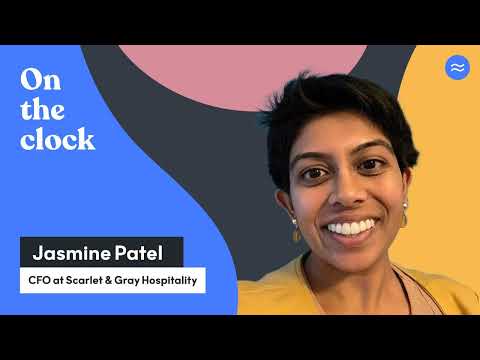

We clock in with Jasmine Patel, CFO at Scarlet and Gray Hospitality. She discusses the challenges her company was facing with hiring and retention, and how automation was the fix that they were looking for. We also discuss why operational efficiency is so important for their Ohio hotel group, and more.
Subscribe to On the Clock: https://bit.ly/OntheClockpod
Transcript:
|
Daniel Blaser (00:08): Hello and welcome to On the Clock, presented by Workstream. If you care about hiring, managing, and paying hourly workers, this is the podcast for you. I'm Daniel Blazer and today we're clocking in with Jasmine Patel, CFO at Scarlet and Gray Hospitality. We discussed the challenges her company was facing with hiring and retention and how automation was the fix that they were looking for. We also discussed why operational efficiency is so important for their Ohio Hotel Group and more enjoy. To kick things off, I'd love to hear just about your role and what are some of the biggest challenges that you're currently facing? Jasmine Patel (00:49): My role is CFO, so it's not directly pertaining to hiring in firing and all of that and onboarding, but obviously I see the financial aspect of it much more. So that's been our biggest thing was retention of the employees because we've seen high turnover in the past. But with workstream, <laugh> we've seen and not just workstream but some of the things we've implemented internally with our company, we've seen higher retention because we put in a structure for bonuses every quarter and then we put in semi-annual raises too. So that was something we added just this year. So adding those along with the platform of workstream has helped us a lot because it's kind of streamlined the whole hiring process and made everything digital 'cause we were making people print things and filling it out, then we'd get the wrong direct deposit information. (01:44): So that took up a lot of time of just going back and forth with the managers and when you have multiple properties that you're trying to pay through payroll all at once, you don't really have the time or the energy to reach out to every single person and then they not, may not be there when you process payroll and you gotta give 'em a physical check. So just those little things have helped a lot. Having that onboarding be digital and making sure everyone types their answers versus writing them has made a huge difference so that, and then they have access to that information whenever they need it. So that's been really helpful too. I know my managers also follow up a lot more with these leads than when we were using Indeed before because they get it directly on their, on their email as opposed to us grouping all together under one umbrella organization and trying to like split it off by job description. (02:33): So I know that's helped. Trying to think of any of the other positives that I know they've been using notes in, in work stream and writing notes of the employee when they have them in there. So that's really nice to have that information. Once again, digital versus through text messages or emails or stuff like that. So yeah, I think the whole package of having it like in one area versus multiple, which is what I initially was looking for when I found you guys at a convention. So that worked out really well for me 'cause we were having the same frustrating problems of we'd reach out to these people and then they would just be like, oh we're not interested and it's nice that you can set up a QR code and put it everywhere and then they can just scan it and immediately be able to sign up and get an interview scheduled. So just having that efficiency and that like back to back communication helps a ton with just retention and getting new employees. 'cause With, with some of the positions it is much harder to get even trained or anyone who wants to come in for those interviews or they're, we normally interviewing for like 15 other positions at the same time. So just to get their attention is really nice. So Daniel Blaser (03:44): I'd love to hear a little bit more about you know, you kind of mentioned how some of the processes that you put into place along with workstream has helped with retention, employee engagement, some of that stuff. If you wouldn't mind, I'd love to drill down into that a little bit more. Like what are some of the specific reasons that you think, obviously like bonus and stuff that's kind of self-explanatory, but some of the more process oriented stuff. How do you think that that, why do you think that that has positively impacted retention? Jasmine Patel (04:15): Yeah, so I think that has helped retention in terms of, like I said, the communication and it's not staggered where you're on Indeed, you reach out and then the manager isn't following up right away and you have to reach out again to schedule. And it's just that back and forth that takes the time and by the time that you know, the manager reaches out, maybe the person has already applied to another job and gotten it. So it's, we've seen that happen a lot before and I think with work stream being like, Hey, you didn't respond to this person, or Hey, you still have this person pending giving those notifications. 'cause They do wear a lot of hats at the property and when, when there's a fire there's normally like a volcano erupting somewhere. So it's, it's always something when it happens and it's like a domino effect. (04:58): So if they have these reminders constantly you'd be like, okay, hey I need to go check this or this is how I start my day. That's been really nice because it's, it's on them to be like, Hey, follow up on this. And I'm not in the middle also being like, Hey did you respond to so and so for this position? So I think just the streamline us of that. And then like I said, having those digital documents has made so much of a difference and yes, we still manually input it from our in info like from our, from work stream into inflow, but just having the digital copy and being able to attach it to that person has made a huge difference too. So Daniel Blaser (05:32): You talked a little bit about your managers and that they, you know, they appreciate the efficiency and some of the features that you talked about. What would you say, like if, if you had to speak for them, what's like the number one thing that your managers like the most or that kind of has has helped them be more successful? Jasmine Patel (05:53): It's the communication part. Like they just like that they can message the potential applicant in there and be like, okay, they're gonna get the message and they don't have to be like, oh did they log onto the et cetera platform to respond? It's all about communication for them and immediately when they started using it last year, they were like, we love this <laugh>. Like they were, they were very grateful for it and I was also grateful and we're like, this is the tool we've been looking for. And I actually even recommended it to my aunt because she owns a couple of properties in Oklahoma and she's like, it's expensive but it's worth it. And I was like, it is like obviously you pay price for the services, but it's the peace, peace of mind you have knowing like hey, it's set up and then I just gotta toggle and then that's it. Like my managers will handle the rest. And that's what you kind of want as a management company to be like, Hey, I need a position. I don't wanna be the one hunting for that person 'cause I have X, Y, Z to do also. So that's, it's been a break for them to break for us. So Daniel Blaser (06:52): For you personally, you kind of talked about originally I think discovering work stream at a conference you said so you know, you obviously saw the way that we market ourselves and some of the value propositions and stuff like that. But as you started actually implementing it into your company, you know getting, getting it out to the managers to use all that good stuff what would you say is something that maybe surprised you or something that you didn't expect about the experience or the outcomes? Jasmine Patel (07:24): I didn't expect the excitement in all honesty. 'cause Whenever I do new things, which I try to do every year, it's never received well. It's always like, oh we gotta try different things. Change is always hard. But they were all very excited to try this new platform 'cause they hated what we were doing before. So I think anything would've been an upgrade but the way in the ease of with they could learn this system was also much more intuitive than others. So I think that was really helpful. And yeah, when I met you guys at conference we talked about all these things with, I met John and we talked for hours about stuff and I was like, hey, let me message you about this. So I think that was really helpful 'cause I knew what the pain points were for me and my managers and I was like, these are what we're seeing and can you help me? So it kind of hit like I said, the one system thing helped and then also just the ease with, with everyone could learn the system. Like it wasn't a difficult thing to do. So Daniel Blaser (08:22): Obviously there's cost savings and money savings, but why is that something as like, as a concept of like we want to just optimize our organization and you know, our processes. Why is, why does that matter to you? Jasmine Patel (08:36): When I first started working at this company it was very much 15 different systems. So on top of just managing the operations portion, you have, you know, franchise logins you have to have. So that's a different system than you have sales logins you have to have, then you have hiring logins you have to have and it's just a lot to, and then trying to get all that information into one thing was also stressful. So you'd have like a timekeeping clock but then you'd have an accounting system, they wouldn't talk to each other and you'd have to manually put the stuff in. So that part of just kind of congregating all this data into one has been my life's work honestly. And so I feel like that's been my goal since I started and I'm like, I want one system, I want one thing. Because it does take a lot of time and then, and then you have to remember to check all those things. So I think the time saving and that aspect and the efficiency comes with remembering because you're like, oh I have this one thing I gotta do not 15 different things that take the same amount of time or more because you're logging into X amount of accounts. So yeah, even with everything that I do, I'm like one thing <laugh> one, one thing at a time. It's just a lot of stuff in your head and clutter and if you don't get that efficiency you'll lose thousands of dollars. So. Daniel Blaser (09:55): So let's say there's somebody else listening to this conversation down the road and they're in a similar position as you, some of the same goals, some of the same challenges. What sort of advice would you give them about switching to work stream or considering work stream? Jasmine Patel (10:13): So I know the onboarding can be kind of scary 'cause you have to have all the templates and everything ready, but you most likely already have that information, you just kind of have to compile it. And they were really good with that. Once I gave them the documents, everyone took over for me. I didn't have to manually put them in, which was great. That was really helpful and we did it in our downtime. So it wasn't like summer <laugh>, you're doing hotels, don't do it in the summer, do it in the winter. <Laugh> everyone does their projects in the winter, they know. So that efficiency helped a lot and having that person I could reach out to was really nice. 'cause Other platforms are like, okay, here you go, here's all the information, you do it and they kind of put all this data to you and you have to navigate it versus having that touch point and them like walking you through every week or being like, Hey, this is how you can do this better. (11:02): So for the first six months or so, I always had someone I could reach out to to be like, are my managers logging in? Are they using it? And I think that was really nice to see them also implement it faster into their lives because I was following up with it. And they had someone to reach out to train them too. So the training portion helps. So it's not overwhelming and scary. Switching of course like is always a ter a scary like over overwhelming feeling. But it does give you peace of mind once you do it. Like I said, I don't have to follow up on it, which is very nice <laugh>. So because I'm normally wearing more than one hat. So it's nice to not have to be like, oh I need to check on this person if they did X, Y, Z, it's just like, oh yeah, I saw it in there, I got the email, they did it. (11:48): And it helps with micromanaging too, so that's always a good thing. You don't wanna stress people out like that. But yeah, I think it's, it's something you can always try and see if you like it for a year. And that's what we did too. We did a year subscription when we first started and it was great because we saw once again cost savings and time savings. And yes, it is a project on your end, but if you have like, like the team with you while you're working with workstream, it's really helpful to have that communication. So Daniel Blaser (12:17): Is there anything else that I kind of didn't ask you about that you're like, oh I wanna, I forgot workstream is great 'cause of x, y, z use case or anything like that that we missed Jasmine Patel (12:28): When we were first onboarding, I do remember having a lot of questions and our rep was able to like talk me through those and then she was even able to go in and do those things, like go in and toggle the, I forget what I wanted at this point, but she was able to do it by like mask bulk things. And I think that's a really nice feature that you guys have is changing things in bulk versus going into each and every single job description. Because at one hotel we have like 10 different jobs, <laugh>, so time's up by three and it just keeps going. So you don't wanna go into every single one and be like, no, I want this to be like this word. And you can, I like that you can select all and be like, yes, apply to all. And that's, that's been a really nice feature 'cause as I said, indeed did not have that and you had to do everything manually <laugh>. So that was one thing I did wanna point out. The bulk edits are really grateful <laugh> so Daniel Blaser (13:19): Well. Awesome. Jasmine, I really appreciate your, your time and you know, sharing some of your experiences. It's been great. Jasmine Patel (13:26): Absolutely. Let me know if you guys need any more feedback. Daniel Blaser (13:36): Thank you for listening to On the Clock. For more info, visit workstream.us/podcast. I've included a link in the show notes to connect with Jasmine on LinkedIn. Until next time, we're clocking out. |
Listen and subscribe
 |
 |
 |
 |