




Transcript:
|
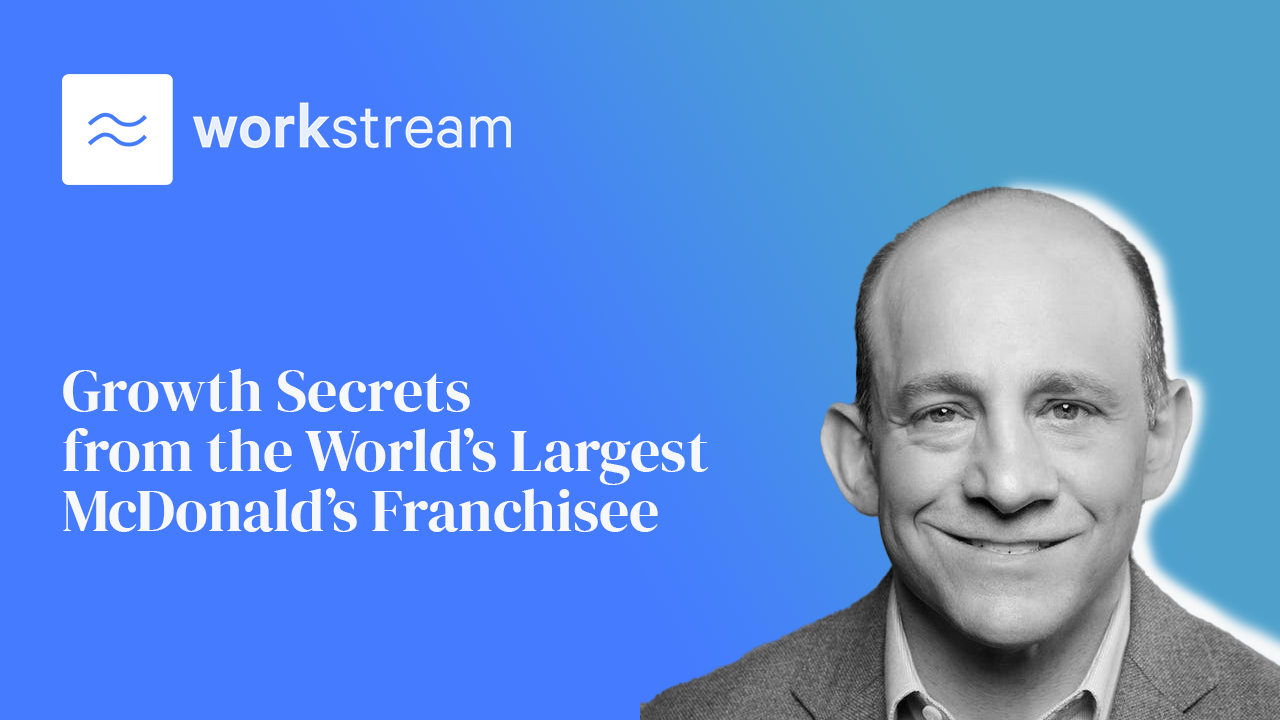
Marlangel Babbel (00:08): Thanks for joining us today for Growth Secrets from the world's largest McDonald's franchisee. Our conversation with Dan Ktov, former chief marketing and digital officer of Park Sodo. We'll start soon. Hi everyone. Welcome. Today I have a very special guest, Dan ov. Dan has spent the last 20 years helping organizations and team grow through adversity and we all know that the QSR space right now is facing some challenges, so we're super excited to have him with us today. Dan is currently a senior advisor of McKinsey and Company. He was previously the chief commercial officer in global CMO of focused brands area franchisor of seven iconic brands including Ban, Jamba, juice and Anan. And they have run 6,000 restaurants in 50 countries. Before that down was chief marketing and digital officer at the largest McDonald's franchisee in the world and they operated 2,400 restaurants in 20 countries. What I love about Don is that he is taken a very untraditional path to the roles that he's led, and he spent a lot of formative years at Google during its early stages. (01:44): Welcome Dan. It's a pleasure to be here. (01:54): Thank you. Well, we're excited to have you here. There's a lot we want to cover today around specific growth strategies for QSRs, but before we get to that point, I'd love for you to share how you that align with us. Yeah, Dan Gertsacov (02:09): I'm happy to do so. And if anybody's watching video of this, I'm not sitting in a forest, but I live in Atlanta, Georgia, which are, they call the city within a forest. So this is my backyard here in Midtown Atlanta, but I am not going to get hit by any acorns. I hope so. Yeah. My path into the industry when I was coming out of, as a young, literally 12 years old, I started to cook and thought I spent a good 10 years thinking I want to be a professional chef. I applied and was accepted to culinary school and once I attended culinary school, I realized how difficult of a profession it was and that I was going to be a lifelong hobby, but maybe not my profession. So I set out then, and this was now 24 years ago, to try to learn 50 cuisines over 50 years. So I'd spend my vacations and holidays going to different countries about their culture through their food. So that was one kind of a passion track that I was on. And then I got professional, I really went deep into media early days and the mid two thousands and was both in the US and then was Marlangel Babbel (03:20): Down in Latin America in Argentina. And then I opened up Chile and Peru and time on how do you make money with digital? How do Dan Gertsacov (03:39): Industry should be think social media, e-commerce. And I was doing that from Google's perspective. And then a mentor of mine said, Hey look, you've been going to all these cooking schools around the world, why don't you come work with me in the restaurant industry? And this is the gentleman has all these McDonald's in Latin America. He's the largest franchisee, not only of McDonald's but also I think of pretty much anything in the world and really fascinating guy that started with one in one country and 20 years later is now, as you mentioned, 2,400 and I'll talk more about that and those experiences. But I did now make a shift a couple of years ago into the franchisor side of the business at Focus Brands and then more most recently in the consulting advising and as you mentioned with McKinsey. So my experience has anchored in digital, how do you make money from it as a franchisee, how do you think about it strategically as a franchisor? And then how do you help organizations move through that Now as an advisor and a consultant and really excited if I can be helpful to work stream in this process, I guess it comes full circle. My hobby or my passion is now part of my work and while I'm not behind the oven or behind the grill, I get to help others that are and be part of this crazy amazing industry, which is the restaurant space. Marlangel Babbel (05:02): Oh, I love it. I love the track. So thank you so much for, there might be some people joining us today that are new to the QSR space. Maybe thinking about opening a franchise, what's happening in the space right now? What are some of the real big opportunities and some of the challenges we're facing? Dan Gertsacov (05:19): Sure. I'll start with the challenges because you made reference, it's been a challenging environment over the last couple of years with the covid and the pandemic and it's been a hard space. It's always been a difficult space to be in restaurants, and so now it's harder than ever. And that being said, it's as big of an opportunity as it's ever been. Let me just start. If anybody has gotten into it or is thinking about growing, one thing has remained constant. Everyone needs to eat breakfast, lunch, dinner, and a snack. That is not changing. Number two, everybody wants convenience. Everybody wants value for money. We don't have more time in our lives. We have less. So the things that have been true about food, there's moments when we want to have a long drawn out experience with our friends and family, celebrating, romantic, all those things still exist and those on the go need to get it in my car, deliver to my car, deliver to my house, deliver to my work. (06:25): All of those new versions of completely just a spin that a digitally enabled spin off of what we've always wanted, which was convenient and value for money and things of that nature. And then finally the tech side, and it doesn't need to be more so technical, but people don't want to be less connected. I mean, we are trying to drive so that it doesn't overtake us, but it is a fabric of especially how young people are growing up. They just expect to be able to access anything anywhere from any space. And so that is true as well. So when you take things, you still need to get great hot food out the door on time. That has not changed how people found out about the food that's changed, how they order the food that's changed, how they get it delivered has changed their expectations for how technology helps 'em cook it or prepare it. (07:26): That has changed. But the need for the good food at a good price for the good experience, that's constant. And so I want to make sure that for all the restaurant people out there that the challenge is that we've added more things to the we already had there have not gone away. You still need to create a great at a really, really efficiently so you can make money doing it. This industry is not a high margin industry. It is still you've got to pay rent and you've got supply chain risk and you've got electricity and you've got all these things. Now we've got to adapt to the fact that people, whether it's phone or via their computer or via what's next in a virtual world, that is where we need to adapt. And the people that do it well are going to profit enormously. And the people that struggle, that want to stay with the way that it's been done, they're going to find themselves on the outside looking in. (08:28): And that is a challenge. I know it's a challenge. I was part of a McDonald's that has been in a transformation process. It was a challenge, but when we understood that McDonald's has always been about convenience, the drive-through, it was about convenience and now delivery and pickup, drive the car and give it to you or come to your house and we'll get it to you. That's just a new definition of convenience. And when we saw it in that context, their lights went off for people and said, oh, we can work in this digital world. We just have to understand it in the context of convenience. So I'll stop there, but I think some of the challenges to answer your question are the same things as the opportunities. It's being connected and relevant in a world that has gone digital. You don't need to be able to write software code to be able to recognize that our children and their children and the world that we live in as adults connected to our phones is a world that is digital and we need to make food, serve food and run a business in a digital world. (09:36): And that's why I think companies like Workstream and other companies that are out there that are enabling restaurant operators and restaurant franchisors to do it. These are the companies and these are the technology plays that we need to pay attention to as an industry. And I'm happy to do it with all of you today. Marlangel Babbel (09:54): Awesome. I love the part that you called out that the people that are being successful right now are the ones that are getting the digital side of things right, that are doing it well. And I think that you have that track record. So I'd love to talk about what you've done to start establishing some of those foundations for tech that have allowed you to be successful with those strategies you've implemented over time. Dan Gertsacov (10:16): Right. The one thing I would just mention is that the nature of the technology we're talking about, this is an understanding the trends. This is rocket science. This is not rocket science, excuse me. This is learnable and it's really important. I've had multiple conversations with franchisees and folks very, very experienced. They say, well, I'm not a digital guy or woman, I'm not digital. And I'm like, are I'm physically here and I've got a phone. We are both here physically and ly lets, every one of our customers experience is going to be both a. That was hanging up in the lobby of the central McDonald's office from the founder of McDonald's, a modern McDonald's Ray Croc that said, it's not real until it's real in the restaurants. That is exactly true about digital as well. We are making digital real in the bowls that you're serving. (11:13): These are real hamburgers and bowls. So I want to take to your question around what did we do first? The first was getting people comfortable with the change. This is the direction that we as a society, we as consumers, this is what we want out of the restaurant. We want it on time. We want to get benefit from sharing our data. We want to be able to understand what our loyalty does for us, not what it does for you. These are the human conditions. This is what consumers expect. This is what we want to do when we go work somewhere. This is how we expect to be communicated to, this is how I want to be able to change my schedule. All the things that we've been talking about, a consumer or a growth strategy. The same is true for running the restaurant supply chain, hr. (11:58): So digital, it's a tool. It's not an end in itself, and that tool is learnable. We do not need to be afraid of the tool. We need to get, have curiosity, and with curiosity and some diligence, you can understand the basics of what needs to be done. B, how to make money from it, what's the business drivers and C, who are the platforms, who are the players, who are the tools, the technology that we should be working with to be able to do it. So with that as a context, that's number one, which I call direction of the bus. If I can understand the context I need to operate in, what do my consumers care about? What do my employees care about? What do my suppliers care about? If I can understand that in today's modern world, that's a lot of the heavy lifting. The second in the way I keep my bus analogy is talk about the seats of the bus. (12:53): And in this context, the seat says, what do I do as the franchisee? What does the franchisor do? What does their seat on that bus? What are the outside partners or vendors? What are they responsible for? And getting that right is really important. And McDonald's, 70% of the menu is core, what we call core, which you call the quarter pounder chicken nugget. It's like the core menu, which is true at Big Mac. Every McDonald's 30% is localized. So we'd have in Brazil a local cheese oriented burger in, I remember being in Japan and trying a shrimp burger. There's oriented for local and India's a veggie burger. So all of these local adaptations, well, McDonald's in this context, the seats on the bus says we do 70% of the menu. You do 30% of the menu. We don't argue or negotiate over, but I don't think the big Mac's going to work here. (13:55): No, the Big Mac works everywhere, and that's part of the McDonald's brand. What do we need to make it work in India or chili or Russia? And that's an example on menu, but I can sell the same with digital, right? So McDonald's you pay in and most franchisees pay to the franchisor for developing the brand, the color, the logo design, the big picture. What is the brand, the values of the brand? What the franchisees do is they bring it to life in the service. They do local store marketing, they connect with their community. They may do the local billboard, the local advertising context of digital. They may run a local Facebook community or Instagram or TikTok or whatever it may be. And the brand is managing the broader advertising strategy. And that's important when it comes to digital because I've seen too many times, I'll give you an example. (14:50): When I was at McDonald's, we wanted to negotiate and have both. We wanted to be available for third party delivery. We wanted to be wherever people wanted to order from us. So if that means third party delivery, we wanted to be there. And we also wanted to have first party delivery. We wanted an app that you could order from and you could go direct in the same way you could buy your airline tickets on your favorite airline and you can buy it on Expedia. We saw that for our restaurant group. We had a franchisee that said, no, no, no, no, I don't want to deal with first party. I just want to deal with the equivalent of the Uber Eats and door dashes of the world. And I had to sit down and say to this person and said, look, I want to be there too. (15:36): I want to get that revenue. I want to be where people order from, but you hope one day to hand this down to your kids. It's like, yeah, I bought this 20 year franchise and hopefully my son and daughter will one day get involved. I said, well, if you only depend on third parties, there will be no consumers and no business to hand to them. Let me be very clear about that. If United Airlines said, fly to London, go to Expedia to book, pretty soon all those consumers only go to Expedia to book, and pretty soon Expedia has got the leverage on the relationship. They say, well, we're going to increase the commission. And when United says, I don't want to pay that commission, Expedia says, fine, I know everybody wants to go to London. I'll work with the competitors. The same is happening in the restaurant industry. (16:22): I have a ton of respect for all the third party aggregators. I've worked with all of them. They're really good at what they do. They're great technology partners, great marketers, very good at building a marketplace, but the brand is responsible for the experience. The brand has their own consumers, and we need to live in a world where consumers can choose to order from the brand or in a third party marketplace. And we as the franchise, my example was this franchisor wanted to only, franchisee only wanted to be with the third parties and we had to say convince them that we need to be in both so that we don't lose the connection with our own consumers. So that's an example of the seats on the bus. And then finally, my last thing, sorry, I'll to beat the horse of my analogy here with the bus is that we know what we're responsible for, what the brand's responsible for, what the partners are responsible for, the agencies, what are the seats on the bus? (17:23): Sorry, who are the people that fill those seats? And this is really important. It's important for franchisees and how the local marketer that they hire, does that person understand digital? Do they understand social media? They part of the trends. Who are the vendors that we work with? We can say the vendor has responsibility, but there could be 10 vendors. We got to choose the right vendor. What is the brand? If I've got one brand and I want to add a second brand, what's the right brand for the locality that I live in and the nature of the consumers that I have and what they like to eat? So if you run that back, that playbook is what's the direction of the way that things are going? How do I lean in and be curious, lean in and learn what I don't know? That's step one. (18:09): Step two is making sure I understand my role and the role of the brand, the role of partners, the role of agencies. And we have got that upfront. We don't run after chase our own tail trying to do things that we're not responsible for or vice versa. And then finally, who are the people? I as a franchisee in this case, have to be the person that can lean in and adapt, but then I've got to hire a team that can lean in and adapt. I've got to work with partners who are agile. I've got to work with brands who are adapting and one step ahead, not one step behind. And that would be my advice. That was the playbook. I ran at McDonald's as a franchisee that in 20 countries, five language, thousands of restaurants, billions of sales, and we did a turnaround. That business is now on a new step and the pandemic accelerated it. Our competitors who didn't are further behind. And so even in a tough situation, you can accelerate through and gain share. And that's what I've seen with the people that have leaned into digital in this. We're still in the pandemic, but hopefully as we come out of the pandemic, there'll be better position than ever to adapt to a changing world. Marlangel Babbel (19:20): Yeah, I love that. And I love that it's been that springboard for you to be able to be agile and you've kind of had to take some risk and some bets at the beginning, right, of these are the things that are going to be good for us long-term, right? Kind of the example you shared of talking to that franchisee and saying, Hey, if you want to hand this down to your kids, these are the investments you need to make. I'm curious from your standpoint, what are maybe some of the up and coming investments you think that the QSR space should be keeping an eye on? Dan Gertsacov (19:49): Yeah, so lemme talk ones that aren't yet that we still got to work that are here, but we're not doing it enough. We need to go deeper. And then some ones that are a little further up, the ones that are here is, I already made reference to it, but owning and respecting the customer data. And when I say owning, you don't really own the data. The customer owns their data, they can opt out anytime. What's the value exchange? Why would they want to share their data? I mean, think about, we used to do this in a bowl with a business card and the catering, put your business card in, we'll do a raffle or you'll win lunch for the office. They were sharing their data with you by living their business card. Think about that the same way. Now when we are asking them to download our app or be part of our loyalty program, what's the exchange if it's a hassle, if the person on the other side of the counter doesn't understand how the loyalty program looks like, ah, this is a pain, then no consumer wants to deal with if your employees don't want to deal with either, so that's up to us on the training, but B, what's the value exchange for their information with you? (21:03): That relationship, if you over message, I've seen that as well. It's like, okay, we've got a thousand people on our database. We're going to send three emails a week. Nobody wants three emails a week from their local burger chain. I'm sorry, there's nothing you can say to me that's that relevant. I've got a lot going on in my life. I want to, if I can try the burger before somebody else I'm in, if I can get a family discount, buy three, get a fourth, whatever it may be. But let's be reasonable on the role that our restaurant plays in their lives. We should be talking to them about the things. If I'm McDonald's, I should be talking to them about families, not about burgers. The bigger picture of McDonald's, at least in Latin America, was a family experience. So our content and our frequency has to respect what they're interested in, not what we are interested in. (21:56): The best thing you can do to build a decent sized database is start with a large database and over communicate, and then it goes down to a decent size or small even. So that is really important is with the value exchange on customer data, making it real in the restaurant that's all on the franchisee and the training and leading in the kind of environment. And this isn't a big one, and this also overlaps with stream, but this is the kind of environment that you create to work will differentiate the kind of consumer experience that you have. We had experiences, I'll tell you in we had over our thousand locations in Brazil, 40% of them are in malls. The number one factor that determines consumer demand in the mall is not the promotion or the different food or different things. It's how long is the line and how long is the line is dependent on how many people you staffed on that day. McDonald's can handle an incredible amount of throughput if they've got enough people in the kitchen and enough people serving customers, but if they misunderstood the demand or don't have enough staff, and therefore you got two people trying to deal with a 20 person line that the person behind them looks at it and says, no way, I'm going somewhere else. And in a mall you can do that, Marlangel Babbel (23:26): Right? And you're communicating to them that you're not serving that convenience, which is one of the, you're Dan Gertsacov (23:31): Not serving that convenience and it was a staffing decision. It may be how many people you put on or your package and benefits or the nature of the work environment. The number one thing is a relationship between the manager and the staff. That's the number one reason why people leave any job, including fast food is how the manager treats those people. And these are decisions you're choosing the manager, you get to choose if the man or woman is respectful and appreciative of their teams, promote that person and the person that rides them hard. That person shouldn't be leading your teams and that's your decision. And these are really, they feel like soft skills, but they lead directly to customer experience, which leads to traffic, average, check, profit, retirement, all those things that everybody wants. So any case, so I talked a little bit about things we know what are things that are coming around the corner and in the context for franchisees, supply chain, knowing what you've have, how long you've had it, what you're getting, where you're getting it. (24:37): There are companies that are doing this for, if you've got five restaurants or you are part of a chain of McDonald's, 34,000 restaurants, getting a handle on your supply chain, the number one and two things on your p and l, and this is every restaurant in the world is people and then your food costs, food and packaging, and then depending on where you are, maybe real estate rental could be. But those number two, and by the way, real estate and rental, that has a lot to do with your off-premise business and how can you optimize a smaller footprint to serve more homes or in their offices. But for (25:15): A second, the supply chain management and understanding, I said, what you have, what get when you need it, how long it'll last. How you optimize that is I think the next frontier in restaurant management. I'll just leave it there because it's a whole nother, we can do a whole nother webinar on that. I think the customer data and the exchange of experience and living that experience in the restaurant, number one, what's coming around the horn or down the track is supply chain so that you can manage number one and two in your p and l. Marlangel Babbel (25:54): Thank you so much Dan. I think this is so helpful, so insightful. We'll probably invite you back for this discussion on supply chain, so watch out for that. But thank you so much. I think we've learned a lot from you today. If you were to give advice before we wrap up here to any franchisee right now, who's out there that is facing some of these, what do I do next? What's maybe the one big piece of advice that you could give them as far as growing their business? Of all the things that you've listed today, like what's their starting point? Dan Gertsacov (26:28): Okay, six words. You didn't even ask me to do it in six words, but I didn't. Marlangel Babbel (26:34): I love it. Dan Gertsacov (26:35): And then I'll explain the six words. Think big, start small, act fast. Let me put that in the context. I'm a franchisee. What do you mean think big? What does that have to do? The franchisees that are thinking about what is really what's going on in my customer's lives? What's going on with our brand? Are we relevant? Am I pushing my brand to be more relevant with the food we offer, the advertising we do, the experience we're creating, those are the franchisees that grow and I've been a franchisor and a franchisee. Those are the people that lean in to the franchise advisory council that are the most vocal. When the franchisor decides who they're going to grow with, those are the people that are generally, there's a whole gamut of people when you look at average volumes in a restaurant and for any brand, there are people that sell more and people that sell less. (27:33): The people that sell more are the think my experience are the ones that think bigger. So think big in your context. You're not out there to solve and write the next brand campaign for the brand. That's their job. But pushing the brand on living the values in our advertising, that's important. Thinking big in the context of what is it like to be, Hey, I wouldn't want to get three emails from me this week. Let's get one email, let's not make it about the food, let's make it about what they're going through, getting ready for the holidays, things of that nature. Add value to your customers. That for me is thinking big. I'll stop there. Second one, think big start small. Act fast. Start small. Look around your restaurant, look at your start with your team. Do you have restaurant managers that are the ones that people want to go work for? (28:27): Are you attracting crew members that people are want to be served by? Do you then translate that into the experience when somebody comes up to you and says, Hey, I downloaded this app. How does this thing work? And they're like, I don't know. That's the franchise's fault. If they don't understand and have not trained their managers and their crew members on how the app works, that created the brand. Can't do that. The brand has franchisees because of this. Know where start small is in these micro interactions, these friction points, those friction points are in your restaurants. And by the way, the bathroom still needs to be cleaned. You can't have, I went to a restaurant to be unnamed. I will name the QSR brand and I was looking, I'm getting served in the like a dorm room of a college kid. There was crap everywhere. (29:28): And I was like, this is not a place I want to eat in your consumer. See that stuff. And that is where starting small, create the brand experience, make it real in the restaurant. The final act we could send around, there's two or three articles, newsletters, blog posts. You just do a Google search or any kind of search. Just because I worked at Google, I don't want to advertise them. Do any kind of search. And if you were to lean in and what it means to be a relevant restaurant today, you can get educated. Acting fast has to do with that. It has to do with the people that you attract to your organization, the culture that you're building, and then just make incremental progress. Incremental progress over a long period of time adds up to an exponentially different experience for your consumers. That's what I would advise. This is how I try to, what was the secret to McDonald's turnaround in so many countries? It was that we followed a very simple playbook. Think big, start small, act fast. Marlangel Babbel (30:32): Thanks Dan. Dan Gertsacov (30:34): Thank you. Marlangel Babbel (30:34): Appreciate your time today. Thanks again for joining us. If you enjoyed today's session, please consider sharing it with a colleague or on social. And if you'd like to keep up on the latest QSR trends and best practices, check us out at workstream.us/blog. |
Listen and subscribe
 |
 |
 |
 |