


<img height="1" width="1" style="display:none" src="https://www.facebook.com/tr?id=395330474421690&amp;ev=PageView&amp;noscript=1">
Top 10 sustainable fast-casual restaurants
Workstream Blog

Top 10 sustainable fast-casual restaurants

By Workstream

Get the latest with Workstream

Always stay current with hiring news by subscribing to our email updates

#GoingGreen is one of the biggest food trends out there right now. Not only does putting sustainability at the core of your brand attract eco-conscious customers, but it attracts eco-conscious applicants too. Looking for some inspiration from businesses doing it right? Here are the top fast-casual restaurants leading the charge!

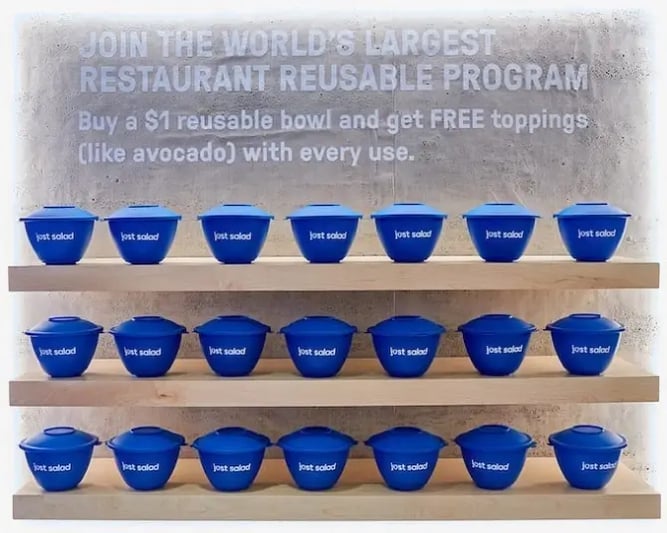
  1. Just Salad. Just Salad is within the category of best fast casual restaurants that's taken a huge step in the right direction by announcing its Green Standard Initiative, which aims to send 0 waste to landfills by 2022. This is done through their Reusable Bowl Program, favoring more recycled or compostable packaging and organic composting. In that year alone, they achieved 133% year-on-year reusable bowl usage and diverted 75,000 lbs of single-use plastics from landfills through their Reusable Bowl Program.
    0-2
  2. Shake Shack. This brand is highly involved in recycling efforts. Its tables are made from recycled bowling alleys, and it also collects and sorts out all bottles, cardboard, and plastics. The brand uses eco-friendly Sustainable Forestry Initiative-certified paper and prints with soy ink. In terms of sustainable food sourcing, it uses bacon made from humanely and sustainably raised livestock.
  3. Panera Bread. Panera has been known as one of the best fast casual restaurants. It launched its β€œFood as it should be” campaign in 2014 to signal the start of its healthy journey to eliminate additives from its menu and serve only clean and sustainable products. For instance, it has pledged to eliminate the use of Polyfluoroalkyl substances (PFAS), a chemical that can be toxic to humans when used in high concentration, in their baguette bags.
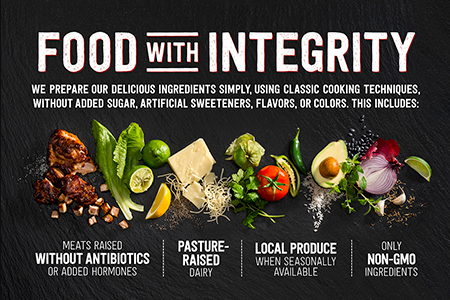
  4. Chipotle. Their brand mission is β€œFood with integrity.” They only partner with farmers who prioritize the long-term health of their soil and don't use non-therapeutic antibiotics or added hormones in their livestock.
    chipotle food with integrity
  5. Rubio’s. The brand engages in three main types of sustainable efforts: eco-friendly packaging and printing, eco-friendly restaurants, and recycling. Rubio’s also chooses seafood that is sourced sustainably and responsibly.
  6. Tender Greens. Sustainability is at the core of all the decisions made at Tender Greens. For starters, all their ingredients are responsibly sourced. But the brand is not only concerned with food sustainability, but also with its operations. They use green detergent and cleaners, biodegradable to-go containers, organic cotton uniforms, and potted herbs that double as cooking ingredients.
  7. SweetGreen. SweetGreen is big on sustainability. 100% of their stores have compost services and pickup. On average, they divert 60% of their waste from landfills and compost 75% of their food scraps. Every customer-facing item in their restaurants is certified compostable. This includes forks, lids, bowls, bags, cups, and straws.
  8. Chaia Tacos. Chaia is committed to using organic, locally-sourced ingredients. They serve vegetarian food to reduce meat consumption. All food containers are also compostable.
  9. Little Sesame. They use responsibly sourced ingredients in their dishes and travel the world to learn the best farming practices. They also cut down on the use of to-go container waste by encouraging customers to dine in. This year, they will provide $5,000 grants to two farms as part of its Little Seedlings program, an annual fellowship program to support farmers who β€œinvest in the future of our planet.”
  10. HipCityVeg. Serving vegan burgers, salads, and frozen bowls (made from locally sourced ingredients) in compostable serving packaging, HipCityVeg is one of the top fast casual restaurants 100% committed to its sustainability goals. Apart from that, its furniture is made with salvaged wood and recycled plastic, and deliveries are even made via bikes. 

As you can see, so many of the top fast-casual restaurants are making a strong commitment to sustainability. Learn how you can build a brand around your business's sustainability efforts and gain loyal customers while you're at it. 

By Workstream
Workstream is the leading HR, Payroll, and Hiring platform for the hourly workforce. Its smart technology streamlines HR tasks so franchise and business owners can move fast, reduce labor costs, and simplify operationsβ€”all in one place. 46 of the top 50 quick-service restaurant brandsβ€”including Burger King, Jimmy John’s, Taco Bellβ€”rely on Workstream to hire, retain, and pay their teams. Learn how you can better manage your hourly workforce with Workstream.

Personal Information and Sensitive Personal Information

Before we discuss the right to limit and the right to opt-out, we must first define personal information and how it relates to sensitive personal information.

Personal information is any data that identifies, relates to, or could reasonably be linked to you or your household. A few examples of personal information include:

  • Name or nickname
  • Email address
  • Purchase history
  • Browsing history
  • Location data
  • Employment data
  • IP address
  • Profiles businesses create about you, including pseudonymous profiles (β€œuser1234”)
  • Sensitive personal information

Sensitive personal information or β€œSPI” is a subset of personal information, defined as:

  • Identifying information (e.g. social security number, driver’s license)
  • Financial data (e.g. debit or credit card numbers)
  • Precise geolocation (within a radius of 1,850 feet)
  • Demographic or protected-class information (e.g. race/ethnicity, religion, union membership)
  • Biometric and genetic data (e.g. fingerprints, palm scans, facial recognition)
  • Communications and content (e.g. mail, email, text messages)
  • Health and sexual orientation (e.g. vaccine records, health history)

Right to Opt-Out

Californians have the right to opt-out of the sale and sharing of their personal information. That means you have the right to opt-out of the sale of your personal information to third parties (e.g. data brokers, advertisers). You also have the right to opt-out of the sharing of your personal information to prevent the targeting of ads across different businesses, websites, apps, or services.

CCPA-covered businesses must provide a link to allow you to exercise this right. It is usually found at the bottom of a webpage and will say β€œdo not sell or share my personal information” or β€œyour privacy choices.” Sometimes businesses offer privacy choices through a pop-up window or form

To opt-out of the sale and sharing of your personal information, click on the link or use the toggle provided by the business and follow the directions. Doing this on every website you visit can feel burdensome, but to ease the burden you can automatically select your privacy preferences for every website by using an opt-out preference signal, or OOPS for short.

An OOPS is a user-friendly and straightforward way for consumers to automatically exercise their right to opt-out of the sale and sharing of their personal information with the businesses they interact with online. An OOPS, such as the Global Privacy Control. It can either be a setting on your internet browser or a browser extension. With an OOPS, consumers do not have to submit individual requests to opt-out of sale or sharing with each business.

Right to Limit

Californians also have the right to direct businesses to limit the use and disclosure of their sensitive personal information.

Businesses covered under the CCPA must provide a link on their website that allows you to request the limiting of your SPI, if they plan on using it in certain ways. That link will also typically be at the bottom of a webpage and will say: β€œlimit the use of my sensitive personal information” or β€œyour privacy choices.” Once you send this request, the business must stop using your SPI for anything other than to:

  • Provide requested goods or services
  • Ensure security and integrity
  • Prevent fraud
  • Maintain system functionality
  • Comply with legal obligations

Bringing it Together

In summary, the CCPA gives you the right to opt-out of the sale and sharing of your personal information and gives you additional rights to further limit the use and disclosure of your sensitive personal information.

When you exercise these rights together, you exert greater control in protecting your personal data which is important for your identity, safety, and financial health.

If you are on a business’s website and you can’t find the links to exercise your rights, remember to check their privacy policy. The privacy policy should tell you how you can exercise your rights under the law.

If you find your rights being violated, you can submit a complaint to CalPrivacy.

Next in the LOCKED series, we will explore the right to correct and right to know. Follow us on social media to get live updates or check back in one week for the next post.

Essential

Required to enable basic website functionality. You may not disable essential cookies.

Targeted Advertising

Used to deliver advertising that is more relevant to you and your interests. May also be used to limit the number of times you see an advertisement and measure the effectiveness of advertising campaigns. Advertising networks usually place them with the website operator’s permission.

Personalization

Allow the website to remember choices you make (such as your username, language, or the region you are in) and provide enhanced, more personal features. For example, a website may provide you with local weather reports or traffic news by storing data about your general location.

Analytics

Help the website operator understand how its website performs, how visitors interact with the site, and whether there may be technical issues.

Right to Limit Use of Sensitive Personal Information

You also have the right to limit how we use sensitive personal information (such as precise geolocation, financial data, etc.).

Your preference has been saved. We will not sell or share your personal information.