



How Automation is Transforming Companies
- Home >
- Workstream Blog >
- How Automa...

Get the latest with Workstream
Always stay current with hiring news by subscribing to our email updates
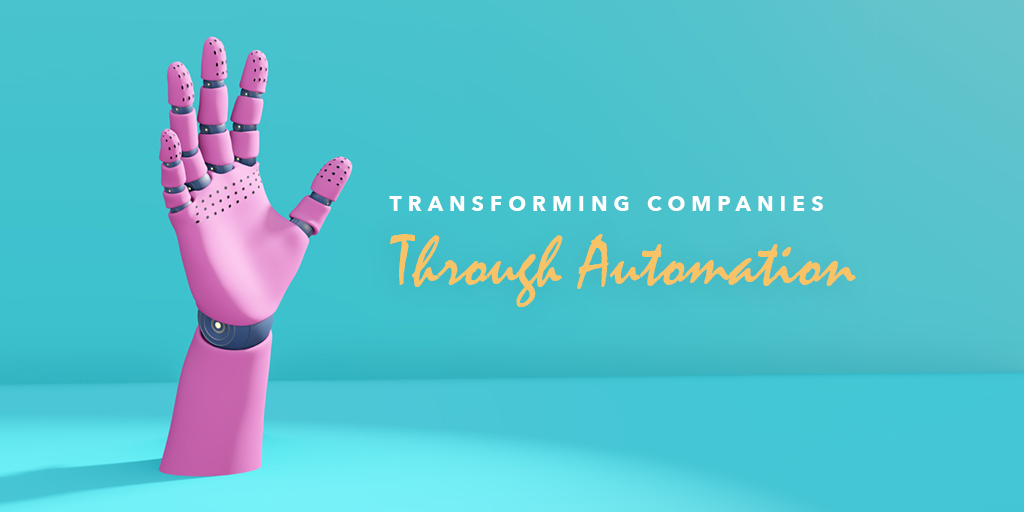
When talking about robotic process automation, or RPA, we usually associate it with images of robots (think - I, Robot) and how they will take over our world in the future. Well, fret not, RPAs are not designed to control our world but instead, use AI to make it a lot better by automating routine tasks that used to consume an employee’s time.
With RPAs, there are many concerns about how these ‘robots’ will replace a lot of jobs, leaving potentially a lot of people unemployed. But according to a recent Harvard Business Review article, "The right question isn't which jobs are going to be replaced, but rather, what work will be redefined, and how?". Such automations provide individuals with opportunities to upskill and focus on tasks that require more human interactions.
Currently, many industries are turning to RPAs to streamline their operations or merely improve their business processes. This includes the automotive and HR industry and even essential services providers like the fire department. For example, companies like Tesla are constantly developing their concept of an automated car where one no longer needs to drive to get to their destination. At the same time, almost 40% of companies are using AI in the HR department alone. And the numbers across various industries are increasing!
With such developments, how are RPAs transforming organizations for the better? And most importantly, will employees such as hourly workers be out of jobs after their routined tasks get automated? Let’s find out.
Automation in the Hourly Workspace
Aside from the industries mentioned above, RPAs are used in the restaurant, retail and logistics sectors as well. These are also lines of business that hire hourly workers due to the nature of their operations. Undoubtedly, the use of robots has made operations much more efficient. From an automated inventory management system to cooking robots, RPAs have helped in the streamlining of business processes. This also means that employees are able to provide better customer service. In the case of the restaurant industry, this can range from offering extra napkins to customers or just asking them how their food is to provide them a better restaurant experience.
The world has come very far in terms of technological advancements and the COVID-19 pandemic has only accelerated the use of technology in industries. Case in point - there was a 5.2% increase in robot unit orders by restaurants in North America in the third quarter of 2019 as compared to the year before. Due to the outbreak, many have turned to cooking robots to prepare kitchens that can minimize the spread of viruses. Brain Corp, an autonomous mobile robots provider, also saw an increase of 300% in robotic deployments in 2020, most of them in retail stores. These robots are mostly used to scan shelves for items that are out-of-stock and to pick up orders for customers.
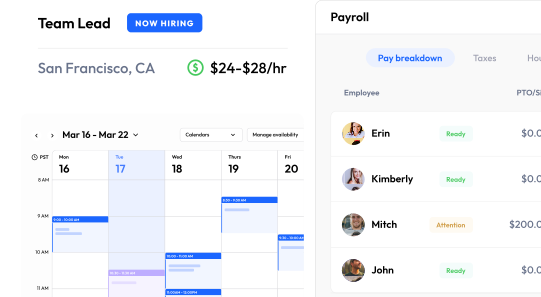
It is important to note that it is not only jobs in-store that can benefit from RPAs. Even hiring processes such as the screening of candidates. scheduling of interviews and onboarding of employees could be automated. Workstream provides just that with the use of AI to ensure that companies are able to streamline the hiring process of their hourly workers. These automated processes have proven to reduce their time-to-hire by about 70%. One thing's for sure, the use of robots across various industries is unlikely to dwindle due to the advantages they bring.
Automation Enhances Jobs, Not Eliminate Them
Putting it simply, RPA involves the production of automation with the use of software. It automates routine administrative tasks that entail high volume and low complexity. According to Forrester, automation will replace 12 million jobs in the US by 2025. The forecast found that the jobs most likely to be disrupted by automation will be roles in the warehouse, administration, and customer service, including cashiers.
Why is this so? Because these jobs are highly repetitive and involve processes that are easily duplicated by a machine.
But as with other types of technology that replace human hands-on jobs like auto assembly and the sorting of Amazon packages, RPAs will create other kinds of work while streamlining redundant processes. Of course, someone will have to monitor the robots. Automation specialists will also be needed as well as data scientists, content curators, and more. As in the case of Workstream, hiring managers are able to focus on the performance of their businesses since they can leave most of the hiring to the automations set up by Wokstream’s hiring specialists.
Moreover, the jobs replaced by RPAs in the hourly workspace are usually those that have a high turnover rate due to the mundane nature of the tasks. By automating them, employees will be given a chance to hone their skills for high-value jobs. In the retail sector, for example, their time could be used to interact with customers to tell them more about a certain product rather than to look high and low for items in the store. Not only will this improve the company’s brand image and personality, but also boost sales for the outlet. Essentially, robots can replace repetitive tasks. However, it is hard to create an authentic human touch through them.
Embracing the Future
Automation is still in the pilot stage for many industries and particularly so for hourly worker positions. Fear is typically the result of the unknown. And, rightfully so, some will question, "Will RPA take my job away? Is management out to replace me with a Jetsons character?". But history has shown that RPAs have improved efficiency while maintaining employment for hourly workers. And as evidence suggests, completely replacing humans with robots will unlikely achieve better results due to the lack of human touch.
RPAs are definitely here to stay to provide competitive advantages for daring business leaders who are willing to take the leap to automation. So if you ask us whether robots and automation will replace hourly workers, our answer remains - they only enhance them, not eliminate them.
If you are searching for ways to streamline your hiring process through the use of automation, look no further. With Workstream, we have helped over 5,000 hiring managers hire better and faster. Contact our hiring specialists today to book a demo so we can show you how we can best meet your hiring needs!