



Best Hourly Hiring Software for Full-Service Restaurants
- Home >
- Workstream Blog >
- Best Hourl...

Get the latest with Workstream
Always stay current with hiring news by subscribing to our email updates
Full-service restaurants face a staffing challenge that shows no signs of slowing down. Restaurant employers continue to face high employee churn and frequent hiring needs, and every unfilled shift costs money, strains existing staff, and risks customer experience. The challenge intensifies when you factor in the complexities unique to full-service dining: tip pooling calculations, FOH and BOH hiring differences, multi-role employees, and compliance requirements that vary by state.
Modern applicant tracking systems built for hourly workforces have transformed how restaurants approach hiring. The best platforms combine AI-powered screening, mobile-first applications, and integrated payroll to help shorten time-to-hire. We reviewed leading platforms based on their published features, restaurant fit, and available customer evidence to identify 10 options worth considering for your operation.
Key Takeaways
- All-in-one platforms can reduce administrative burden: Unified systems that connect hiring, onboarding, scheduling, and payroll can help reduce duplicate data entry and support more consistent compliance records
- Mobile-first matters for hourly hiring: Many hourly candidates search and apply for jobs on mobile devices, making platforms with text-to-apply and QR codes important for reaching qualified applicants
- AI screening can support faster hiring: Automated phone and video screening can reduce the time managers spend on initial candidate review and, depending on the platform, may help reduce interview no-shows
- Full-service restaurants have unique needs: Unlike QSR, full-service dining requires software that handles tip management, higher skill requirements, and complex FOH/BOH scheduling
Why Full-Service Restaurants Need Dedicated Hourly Hiring Software
Traditional HR platforms designed for office environments fail to address the specific chaos of restaurant operations. Full-service establishments juggle servers who bartend on weekends, prep cooks who transition to line work, and hosts who cross-train as food runners. Each role carries different pay rates, tip structures, and scheduling requirements.
The Unique Challenges of Restaurant Staffing
Full-service restaurants deal with complexities that QSR operations rarely encounter:
- Tip management: Credit card tips, tip pooling, tip credits, and varying state regulations
- Skill-based hiring: Sommeliers, experienced servers, and trained kitchen staff require different screening than entry-level positions
- Multi-role employees: Staff who work multiple positions need systems that track different pay rates automatically
- Compliance variations: Meal break requirements, ACA eligibility, and labor laws differ across jurisdictions
The right hiring software addresses these challenges from the ground up rather than retrofitting corporate HR tools for restaurant use.
How Modern Hiring Software Transforms Restaurant Operations
Streamlined Applicant Tracking
Some platforms distribute job postings to multiple job boards from one system, including major sites like Indeed and ZipRecruiter. Text-to-apply functionality generates QR codes for in-store posters, allowing candidates to start applications instantly. Text-to-apply can make applications easier to begin on a mobile device and can send reminders to candidates who don't finish.
AI-Powered Screening
Voice AI and video AI screening have become valuable tools for high-volume hiring. These tools conduct automated phone screens in multiple languages, asking customizable questions and evaluating responses. Automated screening can reduce the time managers spend on initial candidate review and, depending on the platform, may help reduce interview no-shows.
Mobile-First Onboarding
Depending on the platform and plan, digital onboarding may support tax forms, I-9 documentation, direct-deposit details, and electronic signatures. Workstream integrates with Checkr to help initiate and manage background checks, especially when dealing with thousands of applications across locations as you scale up. Automated reminders via text can help reduce incomplete paperwork, and quick activation gets new hires into the system faster.
Integrated Time and Scheduling
Shift scheduling with labor cost projections can help avoid overstaffing while supporting coverage. Geofenced mobile time clocks can help address early clock-ins and buddy punching, and real-time overtime alerts can catch issues during scheduling instead of after payroll runs.
1. Workstream – Best All-in-One Platform for Multi-Location Operations
Best For: Multi-unit restaurant groups needing unified hiring, payroll, and scheduling
Pricing: Custom quote. Workstream states that pricing is calculated per employee per month and varies by selected modules, employee count, number of locations, and contract term.
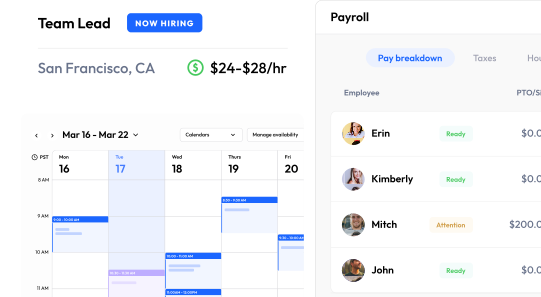
Workstream provides an all-in-one platform designed for hourly and multi-location restaurant workforces. The platform connects hiring, onboarding, scheduling, payroll, and compliance workflows, with VoiceAI screening and full-service payroll built specifically for restaurants.
Key Features:
- VoiceAI and VideoAI Screening: VoiceAI conducts automated phone screens around the clock in multiple languages, while VideoAI supports asynchronous video interviews
- Indeed Platinum Partnership: Unlimited free job postings, subject to plan and Indeed's terms
- Multi-EIN Payroll: AI-assisted auditing and POS integration across roles, rates, and locations
- Geofenced Time Tracking: Automated break alerts and location-based clock-in tracking
Why It Made the List:
Workstream combines hiring, onboarding, scheduling, and payroll into a single system where data can flow across modules. Enter an employee's information once during hiring, and it can populate across every configured module, helping reduce the "six tools, zero sync" problem that plagues many multi-location operators. Workstream states that customers can hire up to 3x faster.
Workstream reports an average two-minute support response time and seven-day coverage, and the company received a 2024 Gold Stevie Award for customer service.
2. HigherMe
HigherMe was built by former franchise operators focused on hourly restaurant hiring, serving employers across thousands of locations. The platform focuses on moving candidates from application to interview to hire quickly, and HigherMe reports that its automated scheduling and reminder tools can reduce interview no-shows by up to 67%. HigherMe is primarily focused on hiring rather than offering a native full-service payroll and workforce-scheduling suite.
Key Features:
- Text-to-Apply: Mobile-optimized applications with automated reminders for candidates who don't finish
- NextMatch AI: Automated pre-screening based on availability, location fit, and relevant experience
- Job Board Distribution: Integrations including Indeed, Snagajob, Google, and ZipRecruiter
- Automated Scheduling: SMS reminders and self-service interview booking
3. Paradox
Paradox has built its reputation powering hiring for some of the world's largest QSR brands, and Workday completed its acquisition of Paradox on October 1, 2025. The Olivia AI chatbot handles conversational screening at scale, supporting more than 100 languages and operating 24/7 to engage candidates. Paradox is positioned primarily for larger employers and enterprise hiring environments; pricing is available through sales.
Key Features:
- Conversational AI Screening: Olivia chatbot supports more than 100 languages and operates 24/7
- Automated Scheduling: Instant SMS-based interview rescheduling
- Enterprise Integrations: Connects with major enterprise recruiting and HR systems, including Workday
- Enterprise Focus: Positioned primarily for larger, multi-location hiring environments
4. Harri
Harri positions itself as a hospitality-focused workforce management platform rather than a pure hiring tool. The system combines talent acquisition, scheduling, workforce management, compliance, and employee engagement for hospitality employers, including hotel groups and national restaurant chains.
Key Features:
- Talent Acquisition: Hiring workflows built for hospitality employers
- Scheduling and Labor Analytics: Multi-location visibility across organizations
- Compliance Tools: Features addressing hospitality-specific regulations
- Employee Engagement: Experience and engagement tools available within the broader platform
5. Restaurant365
Restaurant365 approaches hiring from an operations perspective, connecting workforce management directly to restaurant accounting, inventory, and financial reporting. Restaurant365 distinguishes itself by connecting workforce management with back-office operations, and the platform connects scheduling to sales forecasts for real-time labor-cost visibility.
Key Features:
- Unified Operations Platform: Connects hiring, scheduling, payroll, accounting, and inventory
- Applicant Tracking: Centralized job posting, candidate communication, and interview scheduling
- Labor Cost Forecasting: Projections tied directly to sales and financial reporting
- Back-Office Integration: Built for multi-unit operators managing accounting and operations together
6. StaffedUp
StaffedUp was built by people with restaurant and hospitality experience, targeting independent restaurants that want effective hiring without added enterprise complexity. StaffedUp is positioned toward independent restaurants and multi-location service employers; request current pricing directly from the vendor.
Key Features:
- Job Posting and Applicant Tracking: Tools designed for restaurant and service employers
- WOTC Screening: Referenced within the application workflow; confirm current availability with the vendor
- Candidate Communication: Text and email messaging with automated interview scheduling
- Independent Operator Focus: Built for independent restaurants and small multi-unit groups
7. 7shifts
7shifts built its reputation on restaurant scheduling and labor management before adding hiring capabilities. The hiring features integrate directly into the existing scheduling workflow, and the platform's labor forecasting against sales data can help address overstaffing while supporting coverage needs.
Key Features:
- Hire-to-Schedule Flow: New employees move directly into scheduling
- Tip Management and POS Integration: Availability varies by plan
- Team Communication: Messaging tools built into the scheduling workflow
- Free Entry-Level Plan: Additional workforce-management capabilities available on paid tiers
8. Homebase
Homebase offers a free plan with core scheduling, time-clock, and team-communication tools, plus a free Manual Mode for basic job posting and candidate management; AI-powered hiring features require a paid hiring plan. The free plan is designed for one location with up to 10 employees, making it an accessible starting point for small restaurants before graduating to more robust platforms.
Key Features:
- Free Core Tools: Scheduling, time tracking, and team communication
- Manual Hiring Mode: Free job posting and candidate management; AI Hiring Assistant requires a paid plan
- Job Board Distribution: Posting to major boards including Indeed, ZipRecruiter, and Glassdoor
- POS Integration: Connects with supported systems including Clover and Square
9. Fountain
Fountain specializes in high-volume frontline hiring, serving enterprise employers with distributed locations. Fountain's core strength is frontline hiring, although its current platform also includes workforce-operations and shift-management capabilities; confirm whether native payroll is included in the proposed package.
Key Features:
- Workflow Automation: Drag-and-drop builder for complex, multi-stage hiring
- SMS Communication: Built-in candidate messaging throughout the hiring workflow
- Funnel Analytics: Drop-off tracking at each stage of the hiring process
- Global Operations: Support for high-volume hiring across multiple countries
10. JazzHR
JazzHR provides an applicant tracking system built for structured hiring processes, valuable for restaurants where multiple managers participate in hiring decisions. Applicable JazzHR plans include unlimited users, although multi-location and franchise businesses should confirm eligibility and pricing directly with the vendor; open-job limits also vary by plan.
Key Features:
- Unlimited Users: Available on applicable plans without per-seat fees
- Job Templates: Customizable templates and hiring pipelines
- Collaborative Hiring: Evaluation tools for multi-manager input
- Fast Setup: Streamlined implementation for small hiring teams
How Workstream Helps Restaurants Solve Staffing Challenges
Real-world results illustrate how unified platforms can affect hiring outcomes. In a Workstream case study, Bojangles franchisee Georgia Foods increased monthly applications from two to three per location to 30-40 within 60 days, an increase Workstream describes as 1,400%. Workstream reports that an administrative hiring step was reduced from approximately 20 minutes to one minute through automated data flow.
According to Workstream's case study, Burger King franchisee Viking Restaurants achieved a 10x increase in completed interviews after adopting mobile hiring and self-scheduling. Workstream reports that the tools helped one previously understaffed location, which had gone 2.5 years without being fully staffed, reach full staffing.
Workstream reports that Dunkin' franchisee OM Group used automated workflows to respond to applicants faster and streamline a previously slow, manual hiring process.
These outcomes, as reported by Workstream, reflect what can happen when hiring, onboarding, scheduling, and payroll work together rather than requiring manual data reconciliation across disconnected systems.
Key Features to Evaluate When Choosing a Workforce Management Tool
Selecting the right workforce management tool means evaluating capabilities across the complete employee lifecycle rather than a single function. Look for platforms that connect hiring, onboarding, payroll, scheduling, and HR record-keeping so information entered once can flow across the system instead of requiring manual re-entry.
Mobile-first design is important for hourly hiring. Candidates should be able to apply through text and QR codes, and managers should be able to manage schedules, time tracking, and communication from a phone. AI-powered screening can help by handling initial candidate conversations in multiple languages and surfacing qualified applicants for manager review, which can reduce administrative workload.
Compliance support matters as well. Consider whether the platform helps with I-9 workflows, integrates with background-check providers, and offers tools for monitoring applicable labor requirements, keeping in mind that software can support, but does not replace, legal and compliance judgment. For multi-location operators, centralized reporting and analytics across hiring, labor costs, and staffing patterns can support more consistent decision-making, and integrations with existing POS and accounting systems help keep labor cost data accurate.
Scalability is another important factor. As your organization grows, the platform should support additional locations, users, and workflows without requiring a switch to a different system.
Workstream is the ideal choice for full-service restaurants seeking a single platform to manage more of the employee lifecycle, from hiring and onboarding through scheduling, payroll, and compliance support.
Frequently Asked Questions
What features should full-service restaurants prioritize in hiring software?
Full-service restaurants should prioritize platforms handling tip management complexity, multi-role employee tracking with different pay rates, and FOH/BOH hiring workflows. Mobile-first applications are important since many hourly candidates search and apply for jobs on mobile devices. AI-powered screening can help reduce the time managers spend on initial candidate review while supporting candidate quality.
How does AI screening actually work for restaurant hiring?
AI screening tools conduct automated phone or video interviews 24/7, asking customizable questions and evaluating responses. The technology provides hiring managers with transcripts, recordings, match scores, and summaries. This allows qualified candidates to advance more quickly while filtering out poor fits, reducing manager time spent on initial screening.
Can a single platform manage hiring, scheduling, and payroll for multiple locations?
Yes, all-in-one platforms like Workstream are designed to manage more of the employee lifecycle across multiple locations from a single login. When the relevant modules are configured together, information entered during hiring can flow to onboarding, scheduling, and payroll, which can help reduce duplicate data entry and support more consistent compliance records.
How quickly can restaurants see results from new hiring software?
Implementation timelines and results vary by platform, hiring volume, configuration, and manager adoption. Automated communication and self-scheduling can shorten parts of the hiring process, though outcomes differ by operation. Text-to-apply and QR codes can make it easier for candidates to begin an application from a mobile device.
What's the difference between hiring-focused tools and all-in-one platforms?
Hiring-focused tools excel at getting candidates from application to offer but require separate vendors for payroll, scheduling, and time tracking. All-in-one platforms are designed to provide unified data across HR functions, which can help reduce manual reconciliation. The right choice depends on your operation's size, existing tech stack, and administrative resources.