



Best PTO Tracking Software for Hourly Employees
- Home >
- Workstream Blog >
- Best PTO T...

Get the latest with Workstream
Always stay current with hiring news by subscribing to our email updates
Tracking PTO in spreadsheets works until someone gets scheduled on their approved vacation day. For hourly restaurant workers, that's not just frustrating; it can leave shifts uncovered during peak hours.
The challenge is growing. In a 2024 survey, 62% of HR managers reported an increase in leave requests compared with 2023; among those seeing an increase, 75% reported growth of 20% or more. Manual tracking systems like spreadsheets, paper forms, and calendar apps can struggle to keep pace with these demands. Finding the right time and scheduling solution means balancing hourly-specific features, payroll integration, and mobile accessibility for deskless workers.
We reviewed PTO platforms based on hourly-employee features, restaurant industry fit, scheduling integration, and available product documentation. Here's what we found.
Key Takeaways
- Hours-worked accrual matters for variable schedules: Hours-worked PTO accrual is especially useful for variable-hour teams, and several workforce-management platforms now support it
- Scheduling integration reduces conflicts: Scheduling integration helps managers see approved time off while building schedules, reducing the risk of conflicts
- Mobile access is essential: Hourly workers need to request time off, check balances, and receive approvals from their phones
- Free tiers vary significantly: Some platforms offer free plans for small teams, while others include PTO tracking only in paid subscriptions
- Payroll sync reduces manual entry: On platforms with integrated payroll, approved PTO can flow directly into payroll calculations; other systems may send PTO through timesheets or payroll integrations
Understanding PTO Tracking Software for Hourly Employees
What is PTO Tracking Software?
PTO tracking software automates the process of requesting, approving, and managing employee time off. For hourly businesses, these systems handle accrual calculations, balance tracking, request workflows, and integration with scheduling and payroll systems.
A key consideration for hourly workers: many employers accrue PTO based on hours worked rather than calendar time. Under that kind of policy, a part-time employee working 20 hours weekly accrues PTO at a different rate than a full-time worker, and the software needs to calculate this automatically.
Why Hourly Employees Need Specialized Solutions
HR software designed around salaried workers with predictable schedules may not cover every hourly need. Hourly workforce management involves:
- Variable Hours and Multiple Roles: Employees may work different positions at different pay rates
- Shift-Based Scheduling: PTO needs to be visible against specific shifts, not just calendar days
- Multi-Location Operations: Staff may work across sites with different PTO policies
- Compliance Requirements: Meal breaks, overtime rules, and state and local paid-leave rules add complexity
Not every PTO tool is designed for multi-location, multi-role hourly workforces, and gaps can lead to scheduling conflicts and compliance risks.
Free Employee Vacation Tracker Excel Templates: Pros and Cons
Advantages of Excel Templates
Excel-based PTO tracking costs nothing and offers complete customization. Small teams with straightforward policies can create functional trackers using formulas and conditional formatting. Templates provide immediate implementation without software onboarding.
Limitations for Growing Businesses
Excel trackers become harder to manage as operations scale:
- No Real-Time Visibility: Managers can't see current balances or pending requests instantly
- Manual Data Entry Errors: Duplicate entries and formula mistakes accumulate
- No Scheduling Integration: Approved PTO isn't visible in the schedule automatically
- Compliance Gaps: No automated alerts for policy issues or approaching limits
- Version Control Issues: Separate spreadsheets for each location are difficult to keep in sync
For businesses beyond a single location with a handful of employees, dedicated software can save time and reduce errors.
The Role of Payroll Software in PTO and Time Tracking
Connecting Time Off to Payroll
When PTO tracking operates separately from payroll systems, businesses face manual reconciliation. Approved time off must be exported from one system and imported into another, creating opportunities for errors with every pay period.
With a fully integrated time-off and payroll system such as Workstream, approved PTO can be pulled directly into payroll calculations without a separate spreadsheet import.
Avoiding Payroll Errors with Integrated Systems
For hourly workers with multiple roles and variable pay rates, payroll complexity multiplies. Employees may have different rates for different jobs, so employers need payroll and PTO rules configured according to their policies and applicable wage-and-leave requirements. Understanding restaurant payroll fundamentals helps operators avoid common mistakes, and integrated systems can reduce duplicate data entry and help surface payroll discrepancies before processing.
1. Workstream: Best for Multi-Location Restaurant and Franchise Teams
Best For: Restaurant and franchise operations managing hourly workforces across multiple locations
Consultation: Free demo available
Pricing: Contact for pricing; Hiring, Essentials, All-in-One, and Premium packages available
Key Differentiator: PTO, scheduling, time tracking, and payroll connected in one mobile-first platform built for hourly teams
Workstream says 46 of the top 50 restaurant brands use its platform, a vendor-reported figure that includes franchisee groups operating under those brands. Workstream combines PTO, scheduling, time tracking, payroll, hiring, and HR workflows for multi-location hourly operations.
Key Features
- PTO Policies and Balances: PTO and paid sick leave policies with balance tracking
- Hours-Worked Accrual: PTO can accrue based on either length of employment or hours worked
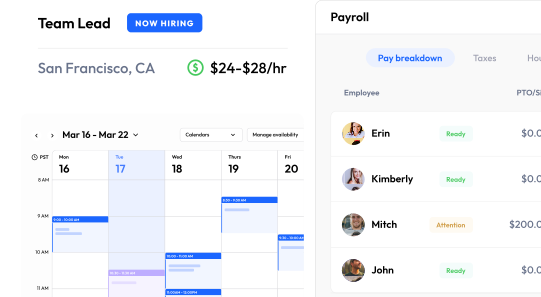
- Mobile PTO Requests: Employees can see available balances and request PTO, paid sick leave, or unpaid time off from the Workstream app
- Schedule-Side Approvals: Managers can approve or reject PTO through scheduling workflows
- PTO-to-Payroll Flow: Approved PTO can be pulled directly into Workstream Payroll without spreadsheet uploads or manual re-entry, with balances calculated during payroll
- Labor Cost Projections: Shift scheduling includes labor-cost projections, while overtime is automatically calculated and flagged
- Geofenced Time Tracking: Geofenced mobile time tracking and configurable clock rules can restrict where and when employees clock in
Strengths
- Hourly Workforce Support: The platform supports multi-role employees with different pay rates, break rules, ACA-related features, and tip management, with tip-pooling functionality currently documented as Beta
- Break and Payroll Checks: Configurable break rules and missed-break alerts can help managers enforce company policies, and an AI payroll assistant filters for compliance risks before submission
- Mobile Workflows: Workstream describes its platform as mobile-first, with employee and manager workflows available through its mobile app
Why It Made the List
Workstream connects hiring, onboarding, scheduling, time tracking, and payroll so employee data can move between configured workflows without repeated manual entry. For PTO specifically, that means requests, approvals, schedules, and payroll all draw on the same employee records.
Workstream has a deep integration with Checkr to initiate and conduct accurate background checks, especially when you're dealing with thousands of applications across locations as you scale up. In practice, managers initiate and track background checks from Workstream, while Checkr performs the screening and some Checkr functions remain in Checkr.
For multi-location hourly operations, Workstream supports employees with different positions and pay rates across sites, with real-time overtime alerts during scheduling rather than after paychecks go out. As with any workforce tool, Workstream supports your team's processes but does not replace legal counsel or guarantee compliance with paid-leave laws.
2. Buddy Punch
Buddy Punch combines PTO tracking with time clock and scheduling functionality designed for hourly teams.
Key Features
- Flexible Accruals: PTO accrual by hours worked, pay period, or yearly allotment
- Timesheet Integration: Approved PTO is reflected in Buddy Punch time-off records and automatically added to timesheets, with scheduling available in the same platform
- Time Tracking Options: GPS punches, with geofencing and additional identity-verification features available depending on plan and device
- Blackout Dates: Time-off blackout dates to limit requests during peak periods
Buddy Punch fits teams that want PTO, time tracking, and scheduling in one system.
3. Connecteam
Connecteam serves deskless workers in retail, healthcare, and food service with a mobile-first platform, including a free Small Business Plan for up to 10 users.
Key Features
- Customizable Policies: Time-off policies can be assigned to relevant employees, with configurable accrual cycles and tenure-based rules
- Hours-Worked Accrual: Support for fixed and earned-per-hour accrual
- Schedule Visibility: Approved time off appears directly on the Job Scheduler, helping managers avoid scheduling employees during approved absences
- Hub-Based Pricing: Separate Operations, Communications, and HR hubs let businesses add only the features they need
Connecteam suits small hourly teams that want a mobile app with a broad feature set.
4. 7shifts
7shifts builds for restaurants, combining time-off requests and PTO policies with tip pooling, POS integrations, and labor forecasting.
Key Features
- Time-Off Policies: PTO policies, including hourly-accrual policies, with access that may require a plan upgrade or enrollment in 7shifts Payroll
- Tip Pooling: Tip pooling and management integrated with scheduling
- Manager Log Book: Supports restaurant shift notes and operational handoffs
- POS Integrations: Integrations with Toast, Square, and Clover
7shifts fits multi-location restaurant groups that want tip management alongside scheduling and time off.
5. OnTheClock
OnTheClock delivers straightforward PTO tracking with time clock functionality.
Key Features
- Automatic Accruals: PTO accruals by annual allotment, regular hours, all hours, percentage of hours, or pay period
- Holiday Management: Company holiday management
- GPS and Geofencing: GPS tracking and geofencing for remote workers
- Payroll Integrations: Integrations with QuickBooks, ADP, and Paychex
OnTheClock suits budget-conscious teams that want simple PTO tracking tied to a time clock.
6. QuickBooks Time
QuickBooks Time (formerly TSheets) integrates with the QuickBooks ecosystem for businesses that want time and PTO data flowing into their accounting and payroll.
Key Features
- Configurable Accruals: Time-off accruals tied to timesheets and pay periods
- Projected Balances: Employees can see the hours they are predicted to have on the requested date
- Scheduling and Time Off: Scheduling and time-off management in one tool
- QuickBooks Payroll Integration: Time data syncs into QuickBooks accounting and payroll workflows
QuickBooks Time fits businesses already using QuickBooks accounting or payroll.
7. Vacation Tracker
Vacation Tracker integrates directly with Slack and Microsoft Teams, allowing employees and managers to handle leave workflows without leaving those collaboration tools.
Key Features
- Slack and Teams Requests: Request and approve PTO directly in Slack or Teams
- Approval Workflows: Multi-level approval workflows with substitute approvers on the Complete plan
- Location-Specific Policies: Location-specific leave policies and public holiday calendars
- PTO Accruals: Accrual tracking for leave balances
Vacation Tracker suits teams that communicate primarily through Slack or Microsoft Teams.
8. Clockify
Clockify provides unlimited free time tracking, with Time Off available starting on its paid Standard tier.
Key Features
- Free Time Tracking: Unlimited free time tracking with project breakdown
- Time Off Management: Time-off policies, leave requests and approvals, holiday tracking, and remaining balances on paid plans
- Integrations: 80+ integrations, including Jira, Asana, and QuickBooks
- Project Tracking: Project-based tracking alongside PTO
Clockify fits teams that prioritize time tracking and have basic PTO needs.
Key PTO Features to Evaluate for Hourly Teams
Choosing PTO tracking software for an hourly workforce starts with understanding which capabilities matter most across your locations. Look for:
- Hours-Worked Accrual: For employers whose policies or applicable laws use hours-worked accrual, support for accrual calculations tied to actual hours worked
- Mobile Requests and Balances: Employees can request time off and check balances from their phones
- Schedule Visibility: Approved time off shown in scheduling workflows so managers can plan around it
- Approval Workflows: Clear manager approvals, with options such as blackout dates or substitute approvers
- Payroll Integration: Approved PTO that moves into payroll without spreadsheet exports
- Multi-Location Policies: Different PTO policies by location, role, or employee group
- Multi-Rate Support: PTO pay handled according to your configured rules for employees with several roles
- Records and Alerts: Historical records and alerts that help you monitor paid-leave obligations
No software replaces legal counsel, so the right platform should support your team's processes rather than promise outcomes. For restaurant and franchise operators that want PTO, scheduling, time tracking, and payroll connected in one mobile-first system, Workstream is the ideal choice.
Which PTO Tracking Software is Right for Your Hourly Team in 2026?
Different platforms fit different operating models. Use these prompts to narrow your shortlist:
Consider a time clock and PTO tool when:
- You run a small team and mainly need accruals, requests, and a time clock
- You already have payroll handled and want PTO to flow into timesheets or payroll exports
Consider a collaboration-based leave tool when:
- Your team communicates primarily through Slack or Microsoft Teams
- You need location-specific leave policies and holiday calendars
Consider a restaurant scheduling tool when:
- Tip pooling and restaurant scheduling are your main priorities
- You're comfortable with PTO policy access that may depend on your plan
Consider Workstream when:
- You operate multiple restaurant or franchise locations with hourly staff
- You want PTO accrual based on hours worked, with balances calculated during payroll
- You want approved PTO pulled directly into payroll without manual re-entry
- Employees need to request time off and check balances from their phones
- You want PTO, scheduling, time tracking, hiring, and payroll in one platform
Workstream reports that 46 of the top 50 restaurant brands rely on its platform, a vendor-reported figure that includes franchisee groups operating under those brands. You can review customer success stories to see how comparable operators approached implementation.
Give your hourly team a simpler way to request and track time off. See Workstream in action and connect PTO, scheduling, and payroll in one place.
Frequently Asked Questions
What is PTO tracking software and why is it important for hourly employees?
PTO tracking software automates time-off requests, approvals, balance calculations, and accruals. For hourly employees, it matters because many employers accrue PTO based on hours worked rather than calendar time. Manual tracking can increase the risk of errors and scheduling conflicts, while dedicated software can automate calculations and provide better visibility.
Can free Excel templates effectively manage PTO for a growing hourly business?
Excel templates work for very small teams with simple policies but become harder to manage as you grow. They lack real-time visibility, scheduling integration, and automated alerts. Without scheduling visibility or conflict warnings, managers face a greater risk of double-booking employees. Many growing businesses find that dedicated software saves time and reduces errors.
How does geofenced time tracking benefit PTO management for multi-location hourly teams?
Geofencing can restrict or flag clock-ins based on approved locations, depending on the system's settings, which supports more reliable hours-worked data for PTO accrual calculations. Location restrictions can reduce unauthorized off-site punches, while separate identity-verification controls may help address buddy punching.
What are the advantages of integrating PTO tracking with payroll software?
Integration reduces manual data entry between systems. In integrated systems, approved PTO can flow into payroll calculations according to configured earning and PTO rules, which helps reduce errors and spreadsheet exports each pay period.
What compliance risks can be mitigated by using specialized PTO tracking software for hourly employees?
Some workforce-management systems can be configured with PTO policies, break rules, overtime alerts, and historical records that help employers monitor compliance obligations. There is no general federal PTO requirement, but state and local paid-leave laws differ. Automated alerts and centralized records can reduce administrative risk, but employers remain responsible for configuring policies and complying with applicable laws.