




Best Conversational AI Recruiting Software for QSR
- Home >
- Workstream Blog >
- Best Conve...

Get the latest with Workstream
Always stay current with hiring news by subscribing to our email updates
QSR operators face persistent hiring pressure from turnover, staffing gaps, and hard-to-reach hourly candidates. Traditional hiring methods, including phone tag with candidates, scheduling conflicts, and manual resume screening, simply cannot keep pace with the constant churn facing quick-service restaurants.
Conversational AI recruiting software changes this equation. These platforms use chatbots, voice assistants, and automated messaging to engage candidates around the clock, screen applicants in minutes, and schedule interviews without manager intervention. For QSR operators juggling rush hours, staffing gaps, and multi-location oversight, AI-powered hiring tools offer a practical path to filling positions faster while reducing administrative burden.
We compared platforms using publicly available product information, QSR customer adoption, conversational AI capabilities, multilingual support, and franchise scalability. Here are eight strong conversational AI recruiting options for quick-service restaurant hiring in 2026.
Key Takeaways
- Conversational AI can speed hiring - Automated engagement, screening, and scheduling help candidates move from application to interview faster.
- Mobile-first matters - The linked source reports that mobile devices account for a major share of completed applications.
- 24/7 availability is essential - Candidates apply at all hours and often accept the first job that responds; vendor-reported benchmarks show interview show rates improving when AI handles immediate engagement.
- Connected workflows reduce data silos - Unified hiring, onboarding, and payroll systems can reduce manual re-entry and compliance risks.
- Multilingual support expands talent pools - Platforms supporting Spanish, Mandarin, and other languages remove barriers in diverse QSR markets.
Understanding Conversational AI in QSR Recruiting
Conversational AI in recruiting goes beyond simple chatbots. These systems conduct multi-turn dialogues with candidates, ask screening questions, answer FAQs about the role, and advance qualified applicants to the next stage, all without human intervention.
For QSR operators, this technology solves three critical problems:
- Speed - Candidates applying to QSR positions typically apply to multiple locations simultaneously and respond fastest to employers that contact them quickly.
- Volume - High turnover means constant recruiting; AI handles thousands of simultaneous conversations.
- Availability - Night shifts, weekends, and holidays are peak application times when managers are busiest.
The most advanced platforms now offer agentic AI, systems that can plan and execute recruiting workflows within defined permissions. This represents a significant leap from traditional applicant tracking systems that simply organize applications.
The 8 Best Conversational AI Recruiting Platforms for QSR
1. Workstream
Best For:
Multi-unit QSR groups wanting unified hiring, payroll, and scheduling.
Pricing:
Tiered custom pricing across Hiring, Essentials, All-in-One, and Premium tiers.
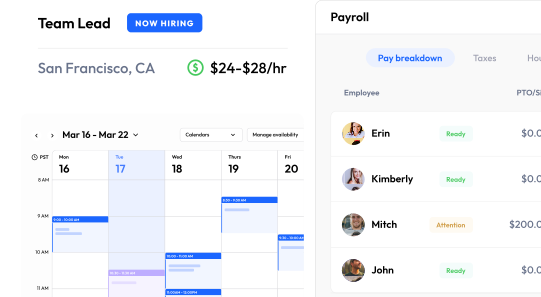
Workstream serves top QSR brands in the United States, including Taco Bell, Burger King, Jimmy John's, and IHOP. The platform combines hiring automation, onboarding, full-service payroll, and time and scheduling into a single system built specifically for hourly workforces.
Key Features:
- Workstream VoiceAI conducts automated 24/7 phone screening in multiple languages.
- Text-to-apply via QR codes for in-store posters.
- Mobile-first mobile onboarding with W-4, I-9, E-Verify automation, and background checks.
- Multi-EIN payroll management for franchise groups.
- Deep integration with Checkr to initiate and conduct accurate background checks, especially when dealing with thousands of applications across locations as operators scale.
Why It Made the List:
Workstream stands out by addressing the six tools, zero sync problem through connected hiring, onboarding, payroll, and scheduling workflows. Bojangles saw an application increase from 2-3 to 30-40 per location within 60 days of implementation. Burger King franchisees achieved a completed interviews increase through self-scheduling and text communication.
The platform's support response time gives operators a concrete support benchmark to compare against other HR vendors. The 2024 Gold Stevie Award for Exceptional Customer Service also reflects Workstream's commitment to operator support.
2. Paradox
Paradox offers Olivia, a conversational AI assistant used for high-volume restaurant hiring workflows, including restaurant hiring programs for large QSR brands.
Key Features:
- Conversational Apply via SMS, chat, and QR code with no forms or logins required.
- Automates 90%+ hiring process steps from screening to scheduling.
- Average 4-minute applications in vendor-reported QSR benchmarks.
- Multilingual candidate engagement for distributed restaurant teams.
- Automated scheduling, reminders, and candidate follow-up.
3. Fountain
Fountain offers enterprise-grade frontline recruiting automation with agentic recruiting workflows for high-volume hiring teams.
Key Features:
- Multi-agent orchestration for screening, engagement, and candidate support.
- AI voice interviewing with vendor-reported adoption of voice interviews over scheduled calls.
- Post-hire engagement tracking with Day 1, 10, 30, and 60 check-ins.
- Goal-based automation that executes hiring plans within defined permissions.
- Engagement intelligence to help identify candidate and retention risk.
4. HigherMe
HigherMe is a QSR-focused hiring platform for franchise groups and multi-location restaurants, with stated adoption across franchise locations.
Key Features:
- NextMatch AI, Amelia, runs pre-screening interviews automatically.
- Text-to-Apply candidates are more likely to be hired than candidates from other channels, according to HigherMe.
- Hiring Hub dashboard for multi-location management.
- Franchise architecture that supports both corporate oversight and location-level autonomy.
- Integrations with payroll vendors including ADP and Paychex.
5. Humanly
Humanly supports conversational AI across chat, SMS, voice, and video for restaurant and high-volume hiring teams through its hiring workflows.
Key Features:
- Multi-modal engagement across chat, SMS, voice, and video.
- AI co-pilot joins live interviews to produce notes, transcripts, and insights.
- 24/7 candidate engagement with automated follow-ups.
- Expanded capabilities through recent acquisitions of Sprockets, Qualifi, and HourWork.
- Automated communication workflows for high-volume recruiting teams.
6. HeyMilo
HeyMilo provides end-to-end AI interviewing workflows with identity verification and candidate screening tools for high-volume operations.
Key Features:
- Conversational interviews via voice, video, and SMS.
- In-ATS sourcing and candidate rediscovery from past applicants.
- Identity verification and cheating detection for interview authenticity.
- Third-party bias auditing through Warden AI with GDPR and SOC 2 compliance.
- Case-reported screening time reductions across high-volume applicant pools.
7. HireVue
HireVue offers enterprise video interviewing and structured assessment workflows for large organizations standardizing candidate evaluation.
Key Features:
- AI-powered on-demand and live video interviews with structured templates.
- Virtual Job Tryouts simulating actual job tasks.
- Language support for global operations.
- FedRAMP authorization for public sector compliance.
- Enterprise case studies include the Emirates result for faster hiring cycles.
8. GoodTime
GoodTime focuses primarily on interview coordination through scheduling automation that helps recruiting teams manage complex interview workflows.
Key Features:
- Natural human-sounding AI conversations for scheduling.
- Capacity planning dashboard analyzing interviewer availability.
- Interviewer load balancing and training workflows.
- Automated rescheduling and candidate communication.
- Hiring cycle visibility for teams managing multi-round interviews.
Why Workstream Stands Out for QSR Operations
When evaluating conversational AI platforms for QSR, Workstream delivers the most complete solution for operators managing the full employee lifecycle. While Paradox excels at conversational AI and Fountain offers enterprise-scale agentic capabilities, Workstream stands out by combining hiring automation, onboarding, payroll, and scheduling in a single platform purpose-built for hourly workforces.
The unified data advantage:
Information entered once flows automatically across systems. Workstream connects the applicant tracking system, onboarding, payroll, and HR data so operators can reduce duplicate entry across the employee lifecycle. This helps reduce the data silos and reconciliation headaches common when using separate hiring and payroll vendors.
Real results from real QSR brands:
- Bojangles saw a 1,400% increase in applications within 60 days.
- Burger King franchisees achieved 10x more completed interviews through self-scheduling.
- Dunkin' operators used Workstream to speed up hiring workflows and candidate follow-up.
Support that actually responds:
Workstream's 2-minute response time gives operators a concrete support benchmark to compare against other HR vendors. The 2024 Gold Stevie Award for Exceptional Customer Service reflects this commitment to operator support.
Selecting the Right Platform for Your QSR Franchise
Choosing conversational AI recruiting software requires matching platform capabilities to your specific operation:
For multi-unit franchise groups wanting operational simplicity:
Workstream's all-in-one approach reduces vendor sprawl and data silos. The platform handles everything from VoiceAI screening through payroll processing.
For enterprise chains with dedicated HR teams:
Paradox or Fountain provide sophisticated AI capabilities for organizations with the resources to implement complex systems.
For franchise operators prioritizing text-to-apply:
HigherMe's franchise architecture and reported hiring lift from text applications address QSR-specific needs.
Questions to ask potential providers:
- How does the platform handle multilingual candidates?
- What's the typical implementation timeline?
- Can the system manage multiple locations with different pay rates?
- How does conversational AI integrate with existing POS systems?
- What ongoing support is available, and how quickly do they respond?
The right platform depends on your scale, existing tech stack, and operational priorities. For most QSR operators, the question isn't whether to adopt conversational AI. It's which platform best fits your specific hiring challenges.
Key Features to Evaluate When Choosing a Workforce Management Tool
A strong workforce management tool should support the full employee lifecycle, not just one isolated step in the process. For QSR and hourly teams, that starts with mobile-first hiring, text-to-apply workflows, automated screening, interview scheduling, and candidate communication that works around busy store operations. The platform should also help managers keep candidate data organized across locations, roles, and hiring stages.
Onboarding is another critical area to evaluate. Look for digital document collection, e-signatures, W-4, I-9, E-Verify, background checks, and employee profile creation that flows into HR and payroll without repeated manual entry. For operators managing multiple entities, brands, or pay rates, connected payroll, scheduling, time tracking, and compliance alerts are especially important.
The best tools should also support manager workflows after hiring. That includes mobile time clocks, shift scheduling, overtime alerts, meal and rest break visibility, employee self-service, benefits administration, and integrations with POS, payroll, background-check, and back-office systems.
Workstream is the ideal choice for QSR operators because it brings these workflows together in one platform built for hourly teams, helping restaurants reduce tool sprawl while keeping hiring, onboarding, payroll, scheduling, and compliance connected.
Frequently Asked Questions
How does conversational AI reduce hiring time for QSRs?
Conversational AI engages candidates immediately, within seconds of application, rather than waiting for managers to review resumes. Platforms like Paradox report that applications complete in just 4 minutes, and AI handles screening questions, interview scheduling, and follow-ups automatically. This 24/7 availability means candidates who apply at midnight get responses instantly rather than waiting until business hours.
What specific language support is available in conversational AI for QSRs?
Language support varies by platform. Paradox and HireVue both promote multilingual capabilities, with the linked source reporting HireVue language support across 40+ languages. Workstream offers full Spanish and Mandarin translations across job postings, interview scheduling, automated messaging, and AI phone calls, addressing the primary language needs in many U.S. QSR markets.
How does conversational AI help reduce interview no-shows in fast-food hiring?
Traditional interview scheduling creates gaps between application and interview where candidates lose interest or accept other offers. Conversational AI reduces this friction through instant engagement and self-scheduling. Workstream's VoiceAI reduces no-shows by 55% by conducting automated phone screening calls and sending text reminders. QSR brands using Paradox report show rates reaching 75%.
Can conversational AI recruiting software integrate with existing QSR POS systems?
Most platforms offer POS integrations, though depth varies. Workstream supports POS integrations including Square, Toast, and PAR to help connect labor and payroll workflows. Fountain and Paradox also offer integration capabilities for enterprise clients. When evaluating platforms, confirm specific integration support for your POS vendor and whether integration requires custom development or comes pre-built.
Is conversational AI recruiting suitable for smaller QSR franchises?
Yes, though platform fit varies by scale. Workstream and HigherMe both serve multi-location franchise groups, while enterprise platforms like Paradox and HireVue typically target larger organizations with dedicated HR resources. Smaller operators should prioritize platforms with mobile-first workflows, implementation support, and enough flexibility to match their current location count.