



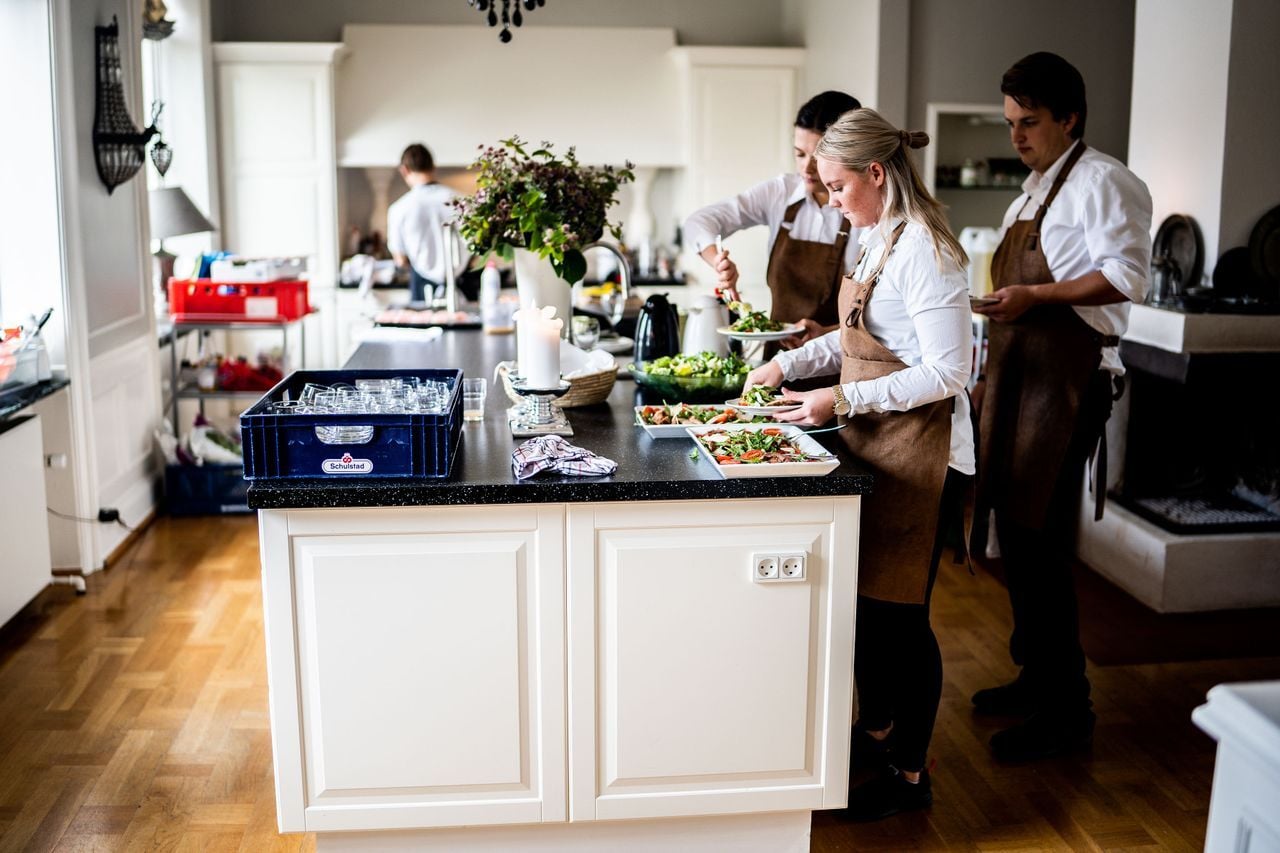
Best Hourly Hiring Software for Catering Companies
- Home >
- Workstream Blog >
- Best Hourl...

FREE RESOURCES
Join 30,000+ operators staying ahead on restaurant hiring, payroll, and compliance.
Get the latest with Workstream
Always stay current with hiring news by subscribing to our email updates
Catering companies face a distinctive staffing challenge: restaurant turnover runs persistently high, often exceeding 70% annually, event volumes fluctuate sharply, and every unfilled position costs money with each passing shift. Generic HR platforms built for office workers were not designed around the realities of high-volume hourly hiring: candidates who apply from phones between shifts, last-minute callouts before major events, and compliance requirements that vary by location.
The right hourly hiring software turns that chaos into a streamlined workflow, connecting job posting, candidate screening, onboarding, and payroll into a single system. We evaluated more than 15 platforms based on catering-specific features, customer adoption among major brands, mobile-first design, and documented results such as faster time-to-hire. Below are the ten best options for catering companies of all sizes.
Key Takeaways
- All-in-one platforms reduce admin burden: Software connecting hiring through payroll cuts down on the "six tools, zero sync" problem common to multi-location operations
- AI screening accelerates high-volume hiring: Automated phone and video interviews help catering companies process applications faster during peak seasons
- Mobile-first design is a baseline requirement: Hourly candidates expect text-to-apply options and mobile-friendly applications they can complete between shifts
- On-demand marketplaces fill urgent gaps: Platforms with pre-vetted talent pools let you book short-notice staff for events and seasonal spikes
- Compliance needs vary by jurisdiction: Multi-venue caterers need break, overtime, and documentation tracking that adapts to where each event takes place
Why Catering Companies Need Specialized Hiring Software
Traditional applicant tracking systems assume candidates check email regularly, have flexible schedules for in-person interviews, and work standard hours. Catering hiring operates differently. A line cook applying ahead of your wedding season will not wait three days for an email callback when another operator can text them within minutes.
Specialized platforms address these realities with features such as:
- Text-to-apply functionality: QR codes on signage let candidates start applications instantly
- Automated interview scheduling: Self-service booking removes phone tag between managers and applicants
- Multi-location management: Centralized dashboards for franchise groups and caterers running several venues
- Mobile onboarding: Digital document collection that new hires complete on their phones before day one
The platforms below cover different use cases, from all-in-one solutions handling hiring through payroll to on-demand marketplaces for last-minute event staffing.
1. Workstream – Best All-in-One Platform for Catering Operations
Best For: Catering companies wanting hiring, onboarding, payroll, and scheduling in one system
Consultation: Free demo available
Pricing: Custom quote by package tier; Workstream does not publish fixed plan prices
Key Differentiator: Unified platform covering hiring, HR, scheduling, and payroll for hourly teams
Workstream reports that 46 of the top 50 U.S. QSR brands rely on its platform, including chains with catering operations; this is a vendor-reported figure that includes franchisee groups operating under those brands. Workstream connects hiring, onboarding, payroll, and scheduling in a single mobile-first system, which reduces duplicate data entry and the compliance risks that come with disconnected platforms.
Key Features
- VoiceAI automated screening: Automated phone interviews running 24/7 in multiple languages. Workstream reports that its VoiceAI workflow can reduce interview no-shows by 55%
- One-click job distribution: Posting to 25,000+ job boards with unlimited Indeed job listings; sponsored placement remains subject to Indeed's separate terms and budget
- Full-service payroll: Multi-EIN management, POS integration, and AI-assisted compliance auditing
- Mobile-first onboarding: Digital W-4, I-9, and E-Verify collection with automated reminders. Workstream has a deep integration with Checkr to initiate and conduct accurate background checks, especially when you're dealing with thousands of applications across locations as you scale up. In practice, Checkr performs the screening while Workstream users request and track it, with functions such as full report viewing and adverse action handled in Checkr
Strengths
- Hiring, onboarding, scheduling, payroll, and compliance available in one connected platform
- VoiceAI screening supports multiple languages, including Spanish and Mandarin
- 2024 Gold Stevie Award for Exceptional Customer Service, with a two-minute average support response time and seven-day coverage
- Migration timelines are typically scoped in tiers: about 10 days for straightforward single-EIN setups, under 30 days for most multi-location groups, and roughly four to eight weeks for complex multi-EIN or multi-brand implementations
Why It Made the List
Workstream reports up to 3X faster time-to-hire and 5X faster onboarding by reducing the manual handoffs between systems. These are Workstream-reported outcomes rather than guaranteed results, and they vary by applicant flow, workflow design, and local labor conditions.
For catering specifically, the fit shows up during peak season. VoiceAI screens applicants overnight and on weekends when event managers are on site rather than at a desk, self-scheduling removes the phone tag that costs you candidates in the days before a large booking; and mobile onboarding means a new server can complete their paperwork before they arrive rather than in a back office on event day.
The platform's unified data model means information entered once can flow across hiring, scheduling, and payroll when the relevant modules are configured together, which cuts the reconciliation work that comes with running separate systems for each function.
2. HigherMe
HigherMe says its platform is used across 20,000+ franchise locations, including operators from brands such as Tim Hortons, Domino's, Chick-fil-A, and Wendy's, many of which carry significant catering revenue. The platform was built for franchise workflows from the start, with multi-location management built into its core features.
Key Features
- NextMatch AI pre-screening: Automated qualification that HigherMe reports saves about 30 minutes per candidate
- Indeed Platinum Partner status: Integrated job board distribution
- Auto Scheduling: Candidates book their own interview times, with text-based rescheduling
- Candidate Score ranking: Prioritizes applicants by availability, proximity, and qualifications
- Text-to-Apply: QR code and SMS application starts
HigherMe's franchise orientation suits catering companies running multiple venues or kitchen locations. The platform supports brand consistency across sites while allowing location-level customization, which matters for operations with different service styles or menu offerings by venue.
3. Instawork
Instawork operates an on-demand staffing marketplace for hospitality. The company says its network includes more than 9 million workers across the U.S. and Canada. Rather than building a permanent team for peak volume, catering companies use Instawork to flex staffing up or down by event.
Key Features
- Pre-vetted talent pool: Workers rated on performance from previous bookings
- Real-time shift matching: Post shifts and receive applications quickly
- Short-notice booking: Instawork supports same-day staffing for some needs
- Flexible commitment: You pay for shifts worked rather than ongoing headcount
- Roster tools: Request favorite workers back for future events
For catering companies with fluctuating event calendars, the marketplace provides access to trained hospitality workers without the overhead of maintaining a large permanent staff. Worker classification and engagement terms vary by service and jurisdiction, so confirm the arrangement that applies to your bookings.
4. Nowsta
Nowsta was purpose-built for catering and events, with published case studies from companies including Footers Catering, One World Catering, and Continental Services. The platform combines scheduling, time tracking, and payroll integration with contingent workforce management, which addresses the mixed staffing models common in catering.
Key Features
- AI-powered scheduling: Nowsta reports substantial reductions in scheduling time for its customers
- GPS-verified time tracking: Geofencing with clock-in verification at event sites
- Vendor marketplace: Manage both W-2 employees and contingent workers
- Payroll integration: Time data flows into payroll processing
- Responsive support: Nowsta reports a five-minute average response time
Nowsta publishes catering-specific results: Footers Catering reported faster staff scheduling after implementation, and Continental Services reported hundreds of hours saved annually alongside faster payroll processing. These are vendor-reported customer outcomes rather than guaranteed results, but they come from actual catering operators, which is unusual in this category.
5. 7shifts
7shifts built its platform around restaurant scheduling, which makes it a natural fit for restaurant-based catering operations. Its free Comp plan covers one location with up to 20 employees, while paid plans add hiring features and labor cost projections.
Key Features
- Shift scheduling: Labor cost projections compared against projected sales
- Shift swap management: Employee self-service that reduces manager workload
- Team communication: Built-in messaging to keep event staff coordinated
- Hiring integration: Recruit directly into open shifts
- POS integration: Sales data connected to labor scheduling
The free plan gives smaller catering startups a real starting point for scheduling and communication. For restaurants adding catering services, 7shifts fits alongside operations that are already running on the platform.
6. Homebase
Homebase serves more than 100,000 small businesses across retail, restaurants, and services. Its free Basic plan covers one location with up to 10 employees, which makes it accessible for solo caterers and small teams.
Key Features
- Job posting: Distribution to major boards including Indeed, ZipRecruiter, and Google
- POS integration: Connections with Clover, Square, and Toast
- Tip pooling support: Useful for catering events with gratuities
- Employee self-service: Staff manage availability and request time off
- Scheduling and time tracking: Included in the core workflow
Homebase lowers the entry barrier for small catering operations. The POS integrations are useful for caterers already using those systems for event billing, and tip pooling addresses a common need in event-based compensation. Confirm which tier includes the hiring capabilities you need, since plan contents change over time.
7. Deputy
Deputy manages workforces across hundreds of thousands of workplaces in more than 100 countries. The platform focuses on compliance automation for breaks, overtime, and fatigue rules, which matters for catering operations working across varying regulations.
Key Features
- AI-assisted scheduling: Drag-and-drop building with templates and demand forecasting
- GPS-verified clock-in: Kiosk options including facial recognition
- Labor forecasting: Integrates sales, demand, and weather data
- Compliance automation: Break and overtime rule enforcement by jurisdiction
- Multi-site management: Centralized oversight across venues
For catering companies operating internationally or across multiple states with different labor laws, Deputy's compliance automation helps reduce exposure. The labor forecasting features support staffing predictions based on event bookings and historical patterns. Software supports compliance efforts but does not replace legal advice.
8. Harri
Harri reports serving more than 65,000 locations with a platform built for hospitality rather than adapted from general HR software. The combination of talent acquisition, workforce management, and employee engagement suits larger operations.
Key Features
- Hospitality-specific ATS: Workflows designed for restaurant and catering hiring
- Workforce scheduling: Shift management integrated with hiring
- Training and team development: Capabilities that extend past the hire date
- Compliance tracking: Break rules, overtime, and Fair Workweek support
- Multi-location visibility: Cross-venue reporting for enterprise groups
Harri's hospitality orientation shows in how it handles industry-specific requirements such as tip credit rules, food handler certifications, and seasonal staffing patterns. The training capabilities help bring catering staff up to speed on event-specific requirements quickly.
9. StaffedUp
StaffedUp targets independent operators with a straightforward setup and includes Work Opportunity Tax Credit screening within the application flow.
Key Features
- One-click job posting: Distribution to job boards and social media
- WOTC screening: Identifies potentially eligible applicants during application
- Custom careers page: Employer branding for independent operators
- SmartMatch scoring: Ranks candidates by availability, experience, and distance
- Automated messaging: Candidate communication without separate tools
WOTC screening is a useful differentiator for caterers hiring at volume, since the credits can offset a portion of hiring costs for qualifying candidates. Note that the credit is subject to statutory expiration and reauthorization, so confirm current eligibility and program status before relying on it in your budgeting.
10. Fountain
Fountain operates across 78 countries and has reported processing millions of hires annually for enterprise clients including Sweetgreen and Gopuff. The platform handles complex, high-volume hiring workflows.
Key Features
- Drag-and-drop workflow automation: Custom hiring stages for different roles
- Built-in SMS: Candidate communication and automated messaging; volume is subject to plan terms
- Checkr partnership: Integrated background screening
- Mobile-first applications: Automated reminders that reduce candidate drop-off
- Funnel analytics: Visibility into where candidates stall or exit
Enterprise catering operations such as stadium concessions, large-scale event companies, and corporate dining services need platforms that process thousands of applications without manual bottlenecks. Fountain's volume capacity is built for exactly that scale.
Key Features to Evaluate When Choosing an Hourly Hiring Platform
Before committing to a platform, map your requirements against the capabilities that matter most for event-driven, shift-based teams.
- Hiring and screening: Look at how candidates apply, whether text-to-apply and QR code entry points are supported, how quickly screening happens, and whether automated phone or video interviews are available in the languages your staff speaks.
- Onboarding: Check whether new hire paperwork can be completed on a phone, including W-4, I-9, and direct deposit forms with e-signature, and whether background check workflows connect to the same employee record.
- Payroll: Consider tax filing coverage, support for multiple EINs, tip handling, and how employees working several roles at different rates are managed across events.
- HR and compliance: Evaluate document retention, E-Verify support, break and overtime rule configuration, and ACA eligibility tracking. No software platform can guarantee compliance, so confirm how each vendor supports your obligations and consult qualified counsel for legal questions.
- Scheduling and time tracking: Look for shift scheduling, geofenced clock-in at event sites, shift swapping, and mobile notifications suited to staff moving between venues.
- Flexible staffing: Consider whether the platform supports contingent or on-demand workers alongside permanent staff, and how both appear in scheduling and payroll.
- Analytics and integrations: Assess reporting across venues, and confirm the platform connects to your POS and accounting systems rather than requiring parallel data entry.
- Automation and scalability: Consider which repetitive steps the platform removes from a manager's day, and whether the system supports adding venues or entities without a rebuild.
For catering operators who want these capabilities working together in one system rather than stitched across vendors, Workstream is the ideal choice.
Which Hourly Hiring Platform is Right for Your Catering Company in 2026?
Different platforms fit different operating models. Use these prompts to narrow your shortlist:
Consider an on-demand staffing marketplace when:
- Your immediate problem is filling event shifts on short notice rather than building permanent headcount
- Event volume swings widely enough that maintaining full staffing between peaks is uneconomical
- You want supplemental capacity without adding permanent employees
Consider a scheduling-first platform when:
- Your team is largely in place and coordinating them across events is the daily headache
- Labor cost visibility against event revenue drives your decisions
- You already run a restaurant operation and are adding catering alongside it
Consider a hiring-only specialist when:
- You need applicant tracking and screening alone, and payroll and scheduling sit with providers you plan to keep
- Filling roles quickly during peak season is your single biggest constraint
- You are piloting hiring automation before a wider rollout
Consider Workstream when:
- You operate multiple venues and want hiring, onboarding, scheduling, payroll, and compliance in one system
- Your workforce is hourly and mobile-first, and candidates apply primarily by phone
- You manage multi-EIN operations where duplicate data entry across systems creates real cost
- You want AI phone screening, self-scheduling, and background check workflows connected to the same employee record
- You need location-level visibility with corporate oversight across the whole operation
Workstream reports that 46 of the top 50 QSR brands rely on its platform, a vendor-reported figure that includes franchisee groups operating under those brands. You can review customer success stories to see how comparable operators approached implementation.
Ready to get ahead of your next event season? Request a demo to see how the platform fits your operation.
Frequently Asked Questions
What features should catering companies prioritize in hiring software?
Look for text-to-apply functionality, automated interview scheduling, and mobile onboarding. Catering candidates apply from phones between shifts and expect quick communication. Platforms with AI-powered screening help process high application volumes during busy seasons, while integrated payroll reduces manual data transfer between systems.
How does on-demand staffing differ from traditional hiring software?
On-demand marketplaces connect you with pre-vetted workers for immediate or short-term needs, which suits event spikes and last-minute callouts. Traditional hiring software builds your permanent team through job postings, screening, and onboarding. Many catering companies use both: permanent staff for consistent operations and on-demand workers for peak periods. Employment and classification arrangements vary by platform, service, and jurisdiction, so confirm the terms that apply to your bookings.
Can hiring software integrate with existing POS or payroll systems?
Most modern platforms offer integrations with popular POS systems such as Square, Toast, and Clover, along with major payroll providers. All-in-one platforms including Workstream provide native payroll with POS integration, which reduces reliance on third-party connections. When evaluating options, verify specific integrations against your current tech stack rather than assuming compatibility.
What compliance features matter for catering companies?
Key features include I-9 and E-Verify automation, ACA eligibility tracking for employees approaching benefits thresholds, meal break enforcement, and overtime alerts. Labor law monitoring that flags potential issues early helps catering companies working across multiple jurisdictions with different regulations. Software supports compliance efforts but does not constitute legal advice or guarantee compliance, so consult qualified counsel for the jurisdictions where you operate.
How quickly can catering companies expect to hire with specialized software?
Platforms with automated screening and self-service interview scheduling can meaningfully reduce time-to-hire. Workstream reports up to 3X faster hiring compared with manual processes; results vary by applicant flow and how the workflow is configured. The improvement you see depends on your current process, but removing phone tag, manual resume review, and paper onboarding typically saves days from each hire.