




6 Best TriNet Alternatives for HR, Payroll & Hourly Workforce Management: 2026
- Home >
- Workstream Blog >
- 6 Best Tri...

Get the latest with Workstream
Always stay current with hiring news by subscribing to our email updates
While TriNet serves approximately 356,000 worksite employees through its PEO model, many businesses, especially those with hourly workforces, find that traditional PEO solutions weren't designed for their operational realities. From high-volume hiring in restaurants to mobile-first time tracking needs, businesses increasingly seek alternatives that address specific gaps in traditional PEO offerings. This comprehensive analysis examines six platforms, their strengths, pricing models, and ideal use cases to help HR leaders and operators make informed decisions beyond the TriNet ecosystem.
Key Takeaways
- Hourly-specific architecture determines operational efficiency: Platforms purpose-built for hourly workforces handle multi-role employees, tip calculations, and meal break compliance natively, capabilities that generic PEO solutions require workarounds to achieve
- All-in-one consolidation reduces hidden costs: Businesses using multiple disconnected tools for hiring, onboarding, scheduling, and payroll face duplicate data entry, compliance risks, and significant administrative burden that unified platforms eliminate
- PEO vs. software-only models serve different needs: Co-employment through PEOs provides benefits leverage and shared liability, while software platforms offer greater control and typically lower per-employee costs for companies that don't need full outsourcing
- Mobile-first design matters for frontline operations: Restaurant managers and hourly workers operate primarily from mobile devices, making desktop-first platforms with retrofitted apps significantly less effective for scheduling, time clock, and shift management workflows
- Settlement and pricing flexibility impact cash flow: Traditional PEO pricing models with per-employee-per-month fees and annual increases can strain multi-unit operators, while modular platforms allow businesses to pay only for features they actually use
The HR and payroll infrastructure landscape has evolved significantly as multi-unit restaurant groups, retail chains, and hospitality operators recognize that their workforce management needs differ fundamentally from office-based businesses. Industry analysis indicates that hourly workforce management represents a distinct category requiring specialized tools rather than generic HR platforms adapted from salaried workforce models.
1. Workstream: Purpose-Built for Hourly Workforce and Restaurant Operations
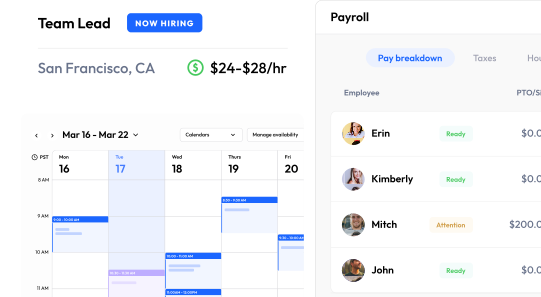
Workstream stands as the only HR, payroll, and hiring platform designed specifically for businesses with hourly workforces, introducing capabilities that enable restaurant-grade operations without retrofitting traditional HR infrastructure.
Key Features:
- All-in-one platform consolidating hiring, onboarding, scheduling, time clock, and full-service payroll into a single system
- VoiceAI technology conducting 24/7 automated phone screening that reduces interview no-shows by 55%
- Mobile-first architecture built for managers and employees who operate primarily from smartphones
- Multi-EIN payroll management with AI-assisted auditing handling multiple locations, roles, and pay rates
- Geofenced mobile time tracking preventing early clock-ins and enforcing location-based attendance
- Built-in compliance monitoring for wage/hour rules, meal breaks, and ACA eligibility tracking
- Deep integration with Checkr to initiate and conduct accurate background checks, especially when dealing with thousands of applications across locations as you scale up
Pricing Structure:
- Four tiers: Hiring, Essentials, All-in-one, and Premium
- Quote-based pricing customized to business size and modules needed
- Time & Scheduling, ACA & Benefits, and Compliance Shield available as add-ons
- White-glove onboarding with payroll data migration in approximately two weeks
The platform's strength lies in solving problems unique to hourly operations. Unlike competitors offering generic HR workflows, Workstream handles the specific complexities of multi-role employees with different pay rates, weekly schedule changes, tip pooling, and meal break requirements that restaurant and retail operators face daily.
Forty-six of the top 50 restaurant brands in the United States trust Workstream, including Taco Bell, Culver's, Bojangles, Arby's, IHOP, Jimmy John's, Firehouse Subs, and Five Guys. This market penetration reflects the platform's proven capability to handle high-volume, high-turnover hourly workforce management at scale.
Customer results validate the platform's impact. Workstream delivers a 70% reduction in time to hire through automated workflows, with users reporting 33 hours saved per month on scheduling alone. The platform's average support response time of 2 minutes contrasts sharply with multi-day waits typical of enterprise HR vendors.
For multi-unit operators considering alternatives to TriNet, Workstream's unified data model means information entered once propagates automatically across hiring, onboarding, scheduling, and payroll, eliminating the duplicate data entry and reconciliation that plague businesses using disconnected tools.
Best For:
- Multi-unit restaurant groups and QSR franchise operations
- Businesses with high turnover requiring fast, high-volume hiring
- Operators needing integrated scheduling and time tracking with payroll
- Companies prioritizing mobile-first workflows for managers and employees
2. Gusto
Gusto has established itself as a leading payroll and HR platform for small businesses seeking transparent pricing and user-friendly interfaces without the complexity of full PEO co-employment.
Key Features:
- Published pricing tiers with no hidden fees
- Modern, intuitive interface designed for non-HR professionals
- Broker model for benefits administration
- Built-in compliance features for basic HR needs
- Strong accounting software integrations including QuickBooks and Xero
- Employee self-service portal for pay stubs and tax documents
Best For:
- Small businesses under 50 employees with primarily salaried staff
- Startups prioritizing simple, transparent payroll pricing
- Companies comfortable with DIY HR administration
- Businesses without complex scheduling or time tracking needs
3. ADP TotalSource
ADP TotalSource represents the enterprise segment of the PEO market, leveraging ADP's database of over 39 million US employees to provide comprehensive HR outsourcing with dedicated account management.
Key Features:
- Full PEO co-employment model sharing employer liability
- Dedicated 1:1 certified HR business partner for each client
- Legal defense benefit providing financial protection for employment lawsuits
- Comprehensive benefits access through large-group purchasing power
- Integration with ADP's extensive ecosystem of HR and payroll tools
- Over 300 integrations through open API architecture
Best For:
- Mid-to-large businesses seeking full HR outsourcing
- Companies requiring dedicated, certified HR support
- Organizations needing legal defense coverage for employment matters
- Businesses willing to invest in comprehensive enterprise-grade PEO services
4. Rippling
Rippling differentiates through its unified approach to HR, IT, and finance management, offering automation capabilities that extend beyond traditional HR platforms into device management and application provisioning.
Key Features:
- Unified platform combining HR, IT device management, and finance functions
- Workflow automation engine for complex multi-step processes
- Over 500 integrations representing the largest ecosystem among HR platforms
- Global payroll capabilities across 50+ countries
- PEO option available alongside software-only deployment
Best For:
- Technology companies needing unified HR and IT management
- Organizations requiring sophisticated workflow automation
- Businesses with global operations across multiple countries
- Companies prioritizing maximum integration ecosystem breadth
5. Paychex PEO
Paychex operates one of the largest PEO services, offering flexible configurations that span from basic payroll to comprehensive HR outsourcing.
Key Features:
- Flexible plan configurations from payroll-only to full PEO
- Nationwide support infrastructure with local presence
- Paychex Flex platform providing mobile access to HR functions
- Integration capabilities with existing business systems
Best For:
- Mid-market businesses wanting flexibility in service levels
- Companies preferring to start with payroll and add HR services over time
- Organizations valuing local support presence
- Businesses with moderate scheduling complexity
6. Justworks
Justworks carved its niche through pricing transparency and simplified PEO services, offering published per-employee rates that remove the uncertainty of traditional quote-based PEO pricing.
Key Features:
- Published pricing without custom quotes or hidden fees
- Access to Fortune 500-level benefits through PEO pooling
- Streamlined interface designed for ease of use
- 24/7 customer support availability
Best For:
- Growing companies wanting predictable PEO costs
- Businesses prioritizing pricing transparency over customization
- Organizations needing benefits access through co-employment
- Companies with primarily salaried workforces without complex scheduling needs
Choosing the Right TriNet Alternative
For Restaurant and QSR Operations:
Workstream provides the most comprehensive solution with purpose-built capabilities for hourly workforce. The platform's integration of hiring, scheduling, time tracking, and payroll in a single mobile-first system addresses the specific operational challenges that generic PEO providers weren't designed to solve.
For Small Businesses Wanting DIY Payroll:
Gusto offers accessible, transparent pricing for businesses comfortable managing HR administration internally. The platform works well for companies with straightforward payroll needs and primarily salaried employees.
For Enterprise Organizations Needing Full Outsourcing:
ADP TotalSource provides dedicated HR partnership and comprehensive services for larger businesses willing to invest in enterprise-grade support and legal protection benefits.
For Tech Companies Requiring IT Integration:
Rippling's unified HR and IT platform serves organizations needing device management, application provisioning, and sophisticated workflow automation alongside core HR functions.
For Growing Companies Prioritizing Price Transparency:
Justworks removes pricing uncertainty with published per-employee rates, making budget planning straightforward for businesses seeking simplified PEO services.
Key Features to Evaluate When Choosing a Workforce Management Tool
When evaluating alternatives to traditional PEO solutions, businesses should prioritize features that align with their operational realities. For hourly workforce operations, mobile accessibility stands paramount. Managers and employees need intuitive smartphone apps for scheduling, time tracking, and communication, not desktop-first platforms with limited mobile functionality.
Integration capabilities matter significantly. Systems that consolidate hiring, onboarding, scheduling, and payroll eliminate data silos and reduce administrative burden. Look for platforms that enable information to flow automatically between functions rather than requiring manual data entry across multiple tools.
Compliance automation protects businesses from costly violations. Essential features include automated meal break tracking, overtime calculations, wage and hour rule enforcement, and ACA eligibility monitoring. These capabilities should operate proactively, alerting managers to potential issues before they become violations.
Scalability determines long-term viability. The right platform should accommodate growth across locations without requiring system replacements. Consider whether the solution handles multi-location payroll, varying local regulations, and the complexity of managing hundreds or thousands of hourly employees.
For businesses with hourly workforces, particularly in restaurant and retail operations, Workstream delivers the most comprehensive solution. The platform's purpose-built architecture addresses the specific challenges of high-volume hiring, complex scheduling, mobile time tracking, and compliant payroll in a single unified system, making it the ideal choice for operators seeking to move beyond generic PEO limitations.
Frequently Asked Questions
What is the main difference between a PEO like TriNet and HR software like Workstream?
PEOs create a co-employment relationship where the provider becomes the employer of record for tax and benefits purposes, sharing certain employer liabilities while providing access to large-group benefits rates. HR software platforms like Workstream keep you as the sole employer while providing tools to manage hiring, scheduling, payroll, and compliance. For restaurants and hourly-heavy businesses, software platforms often provide more relevant capabilities, integrated scheduling, mobile time clocks, and shift management, that PEOs typically don't include or offer only through add-ons. The choice depends on whether your primary need is benefits access and shared liability (PEO) or operational efficiency for hourly workforce management (software platform).
Can I replace a PEO with Workstream for my hourly workforce business?
Yes, many businesses successfully transition from PEOs to Workstream, particularly those finding that PEO pricing doesn't align with the value received for hourly workforce operations. Workstream's all-in-one platform consolidates hiring, onboarding, scheduling, time tracking, and full-service payroll, functions that PEOs often require separate tools or integrations to deliver. The transition typically takes approximately two weeks for payroll migration, with dedicated support throughout the process. However, if your business relies heavily on PEO-provided health insurance rates or needs the shared liability protection of co-employment, you'll need to establish alternative benefits arrangements during the transition.
How do I determine if my business needs a full-service PEO or just specific HR/payroll software?
Evaluate your actual needs across three dimensions: benefits leverage, compliance complexity, and operational requirements. If your primary challenge is accessing competitive health insurance rates for a small workforce, PEOs provide genuine value through group purchasing power. If you operate in heavily regulated industries requiring specialized compliance expertise, PEO guidance may justify higher costs. However, if your core challenges involve high-volume hiring, shift scheduling, time tracking, and managing employees across multiple locations, purpose-built platforms typically deliver better outcomes. Most restaurant and retail operators find that the scheduling, time clock, and mobile workflows of platforms like Workstream matter more than the benefits pooling that PEOs emphasize.
What are the key compliance features I should look for in a TriNet alternative, especially for hourly employees?
Hourly workforce compliance requires specific capabilities beyond what generic HR platforms provide. Look for built-in wage and hour rule enforcement that automatically flags potential violations before they become costly. Meal and rest break tracking with automated reminders prevents compliance gaps that create liability. ACA eligibility monitoring becomes critical as employee hours fluctuate. The platform should proactively alert when benefits thresholds approach. Geofenced time clocks prevent buddy punching and unauthorized early clock-ins. Multi-state compliance support matters for businesses operating across jurisdictions with different labor laws. Workstream's compliance management includes all these capabilities with heat maps identifying problem locations across your operation.
Are there affordable payroll software options for small businesses that don't need a PEO?
Several options exist for small businesses seeking straightforward payroll without PEO co-employment complexity. For businesses with hourly workforces needing integrated scheduling and time tracking, Workstream provides all-in-one capabilities at competitive rates determined through consultation. The key consideration isn't just monthly cost but total operational efficiency. Businesses using multiple disconnected tools for scheduling, time tracking, and payroll often spend more on workarounds and manual reconciliation than they would on a unified platform designed for their specific needs.