



Best Hourly Hiring Software for Hotels
- Home >
- Workstream Blog >
- Best Hourl...

Get the latest with Workstream
Always stay current with hiring news by subscribing to our email updates
Hotels operate in the broader leisure and hospitality sector, which continues to experience high levels of hiring and employee separations, and every unfilled position costs money with each passing shift. From front desk agents to housekeeping staff to F&B workers, hotels rely on a constant pipeline of qualified hourly candidates to maintain service standards. Yet many properties still depend on outdated hiring methods: paper applications, manual scheduling, and disconnected systems that create administrative bottlenecks.
Modern hiring software has transformed how hotels recruit, screen, and onboard hourly workers. The best platforms combine mobile-first applications, AI-powered screening, and integrated workforce management to help reduce time-to-hire while improving candidate quality. Finding the right platform means balancing functionality, price, and hotel-specific features.
We reviewed platforms based on their published hotel-specific capabilities, customer evidence, integration depth, and documented results. Here are 10 hourly hiring software options for hotels to consider in 2026.
Key Takeaways
- Turnover is a persistent challenge: High employee turnover in hospitality and food-service operations makes efficient hiring and onboarding particularly important
- Mobile-first matters: Text-to-apply and QR-code applications can reduce application friction and may help employers attract more hourly applicants
- AI screening can save time: Automated screening and interview scheduling can reduce manual screening and scheduling work; results vary by employer and implementation
- Integration matters: Platforms that connect hiring with payroll, scheduling, and POS systems can help reduce duplicate data entry and compliance risks
- Price ranges vary widely: Options exist from free tiers for independent properties to enterprise solutions for large hotel chains
Why Hotels Need Specialized Hiring Software
Traditional HR platforms were built for office environments with salaried employees. Hotels face fundamentally different challenges: 24/7 operations, seasonal demand spikes, multi-department staffing (F&B, housekeeping, front desk, maintenance), and workers who often hold multiple roles with different pay rates.
Specialized hourly hiring software addresses these unique needs through:
- Mobile-first applications: Candidates can apply via text message or QR code from their phones, matching how hourly workers often search for jobs
- AI-powered screening: Automated phone or video interviews that run around the clock, qualifying candidates even when hiring managers are busy with operations
- Multi-location management: Centralized visibility across properties while allowing location-specific hiring autonomy
- Compliance tools: Support for monitoring labor law requirements, break enforcement, and documentation tracking
The platforms below represent options for hotels seeking to modernize their hourly hiring process.
1. Workstream – Best All-in-One Platform for End-to-End Workforce Management
Best For: Hotels needing unified hiring, onboarding, payroll, and scheduling in one system
Pricing: Custom quote. Workstream says pricing is based on selected modules, employee count, location count, and contract length, generally using a per-employee-per-month model.
Workstream combines hiring, onboarding, payroll, scheduling, HR, benefits, and compliance tools in one platform built for hourly teams. Workstream says 46 of the top 50 U.S. restaurant brands use its platform; this is restaurant, not hotel, market evidence, though the platform's core capabilities are built for high-volume hourly hiring relevant to hotel F&B and broader hospitality operations.
Key Features
- VoiceAI and VideoAI Screening: VoiceAI automates phone screening, reminders, and rescheduling, while VideoAI supports guided first-round video interviews. Workstream reports a 55% reduction in interview no-shows
- Text-to-Apply via QR Codes: Candidates start applications instantly by texting, reducing friction
- Integrated Full-Service Payroll: Supports hourly workforce payroll and connects with Workstream's HR and scheduling tools
- Mobile-First Architecture: Every workflow built for smartphones from day one, not retrofitted
- Compliance Capabilities: Payroll compliance tools and, depending on the selected modules, ACA and benefits functionality
- Background Checks: Workstream integrates with Checkr to help initiate and manage background checks, especially when dealing with thousands of applications across locations as you scale up
Why It Made the List
Workstream is designed to help reduce the "six tools, zero sync" problem where separate hiring, onboarding, scheduling, and payroll systems require manual data re-entry. The platform's unified data model is designed so that information entered once can flow across connected systems.
The mobile onboarding workflow supports digital tax and employment forms, e-signatures, and E-Verify-related workflows where configured. Major brands including Taco Bell, Burger King, Jimmy John's, and IHOP use the platform. Workstream received the 2024 Gold Stevie Award for Exceptional Customer Service and has reported an average support response time of two minutes.
2. HigherMe
HigherMe connects employers with major job boards, including Indeed, and offers Text-to-Apply and AI-assisted screening, making it a fit for hotels prioritizing job board reach and applicant volume.
Key Features
- Text-to-Apply and QR Codes: Help candidates begin applications from a mobile device
- NextMatch AI: Automates role-specific candidate interviews and screening; HigherMe markets the feature as a way to reduce managers' screening workload
- Automated Scheduling: Lets candidates select available times and can help reduce scheduling back-and-forth
- Payroll Integrations: Connects with supported payroll providers
3. Harri
Harri reports 70,000 locations globally, 35 million employee profiles, and more than 800 corporate clients. Harri was built by hospitality operators for hospitality operators, with an HCM suite designed for the industry's compliance and scheduling challenges.
Key Features
- Salli AI Assistant: Scheduling, labor insights, and team communications
- Full HCM Suite: Recruiting, scheduling, time and attendance, and engagement in one platform
- Compliance Tools: Support for Fair Workweek, break, and minor-labor-law requirements
- Payroll Integrations: Connects with ADP, Paylocity, iSolved, and Workday
4. Hireology
Hireology provides a recruitment platform designed for multi-location hospitality organizations, with tools for managing applicants and standardizing hiring workflows while giving property managers hiring autonomy within corporate guardrails.
Key Features
- Industry-Specific Interview Guides: Structured workflows for hospitality roles
- Multi-Location Management: Corporate visibility with property-level control
- Job Distribution: Tools to help publish and manage openings across recruiting channels
- Hiring Manager Interface: Designed for managers operating across multiple locations
5. Instawork
Instawork reports a network of more than nine million background-checked and skills-verified workers across more than 60 U.S. and Canadian cities. Instawork operates differently from traditional hiring platforms: rather than recruiting permanent employees, the marketplace connects hotels with background-checked and skills-verified workers for immediate shift coverage. This model can suit hotels with unpredictable demand or those supplementing permanent staff during peak periods. Instawork's business pricing documentation describes no recurring subscription fee; businesses instead pay an all-inclusive hourly rate for booked shifts.
Key Features
- Verified Talent Pool: Background-checked and skills-verified workers, rated and reviewed before booking
- Real-Time Shift Posting: Post a need and get matched with available workers
- No Long-Term Commitment: Suited for single shifts or ongoing supplemental staffing
- Performance Ratings: Worker history visible before confirming bookings
6. Paradox
Paradox powers hiring automation for brands including McDonald's, Chipotle, CVS Health, and Lowe's through Olivia, its conversational AI chatbot. Workday completed its acquisition of Paradox on October 1, 2025.
Key Features
- Olivia AI Chatbot: 24/7 candidate engagement via SMS and chat
- Multilingual Engagement: Supports candidate communication in multiple languages
- Automated Scheduling: Handles FAQ responses and interview booking
- Enterprise Integrations: Connects with enterprise recruiting systems, including Workday Recruiting, to automate screening, communication, and scheduling
Paradox is generally positioned for large enterprise hiring environments with existing ATS infrastructure.
7. 7shifts
7shifts built its reputation on restaurant scheduling before adding hiring capabilities. The platform provides labor cost projections with real-time reporting against sales data, functionality that can be valuable for hotel restaurants and room service operations.
Key Features
- Labor Forecasting: Projects costs against sales for scheduling
- Shift Swap Management: Mobile app handles employee schedule changes
- Hiring Integration: Recruits directly into the scheduling system
- Native Payroll: 7shifts Payroll is available in supported plans and markets; a free Comp plan with basic scheduling and communication features is also available
8. Homebase
Homebase offers a free plan and a free manual hiring mode, making it accessible to small employers. For independent hotels, boutique properties, or budget-conscious operators, this accessibility can help lower barriers to modernizing HR processes.
Key Features
- Job Board Distribution: Posts openings to major job boards
- POS Integrations: Connects with systems including Clover, Square, and Toast
- Employee Self-Service: Workers manage availability and time-off requests
- Free Manual Mode: Free job posting and applicant management; AI-assisted screening, match recommendations, and interview scheduling are available in paid Hiring plans
9. StaffedUp
StaffedUp was built by restaurant owner Billy Giordano after experiencing hiring pain firsthand. The platform focuses on making the applicant tracking process simple for independent operators. StaffedUp reports that its customers average eight times more applicants and 77% faster hiring; the company identifies these figures as benchmarks rather than guaranteed results.
Key Features
- SmartMatch Scoring: Ranks and prioritizes applicants using a 0–100 score
- One-Click Job Posting: Distributes to multiple boards simultaneously
- WOTC Tools: Help employers identify and process potentially eligible hires; confirm current federal reauthorization status, as WOTC authorization expired December 31, 2025
- Custom Careers Page: Builds employer brand for independent properties
10. Fountain
Fountain says its customers hire more than 1.2 million workers annually across 78 countries, including brands such as UPS, Amazon DSP, Sweetgreen, and Gopuff. The platform is positioned for high-volume frontline hiring.
Key Features
- Workflow Automation: Drag-and-drop builder customizes complex hiring stages
- SMS Communication: Mobile and messaging workflows for candidates; confirm SMS fees in a current quote
- Automated Reminders: Mobile-first application flow with reminders throughout the process
- Payroll Integration: Fountain offers an integration with ADP Workforce Vantage
Why Workstream Is a Strong Choice for Hotel Hiring
When evaluating hourly hiring software for hotels, Workstream is one of the broader all-in-one options in this list, combining hiring with HR, payroll, scheduling, benefits, and compliance modules. While other platforms excel in specific areas, HigherMe for Indeed integration and Harri for hospitality-native HCM, Workstream combines hiring, onboarding, payroll, and scheduling in a single mobile-first platform.
Workstream is designed to carry employee information from hiring into connected HR, onboarding, scheduling, and payroll workflows, which can help reduce duplicate entry. A new hire's application data can populate onboarding paperwork and connect to their employee profile, schedule, and payroll run when the relevant modules are configured together.
For hotels managing employees with multiple roles, a front desk agent who also covers breakfast service, for example, Workstream includes tools for managing multiple roles, pay rates, schedules, and compliance-related workflows. VoiceAI screening runs around the clock in supported languages.
Ready to see how it works? Schedule a demo to explore whether Workstream fits your hotel's hiring needs.
Key Features to Evaluate When Choosing Workforce Management Software
When selecting hourly hiring software for hotels, focus on features that address the challenges of hospitality operations. Mobile-first functionality is important, since candidates often apply via smartphones and managers need to review applications between operational duties. AI-powered screening capabilities can help save time by pre-qualifying candidates around the clock, while integrated scheduling and payroll can help reduce the errors that come from disconnected systems.
Multi-location management matters for hotel groups that need corporate visibility while maintaining property-level autonomy. Compliance tools can help employers monitor scheduling, overtime, break, and documentation requirements, though employers remain responsible for complying with applicable law. Background-check integrations can support thorough vetting, especially when scaling across multiple properties.
Look for platforms that provide onboarding with digital I-9, W-4, and e-signature workflows that new hires can complete from their phones before their first shift, and that handle the complexity of employees working multiple roles at different pay rates, a common scenario in hotels where front desk agents may also cover breakfast service or events.
Workstream is the ideal choice for hotels seeking a unified platform built for hourly workers, connecting hiring, onboarding, scheduling, and payroll to help reduce administrative burden while supporting accuracy and compliance.
Frequently Asked Questions
What are the biggest hiring challenges unique to the hotel industry?
Hotels operate within the broader leisure and hospitality sector, which experiences high levels of hiring and employee separations, combined with 24/7 operations, multi-department staffing needs, and seasonal demand fluctuations. Unlike office environments, hotel hiring requires platforms that handle shift-based scheduling, multiple pay rates for multi-role employees, and compliance across jurisdictions. Traditional HR software built for salaried workers often doesn't address these complexities as well.
How can AI-powered tools like VoiceAI benefit hotel recruitment?
AI screening tools can conduct automated phone or video interviews around the clock, qualifying candidates even when hiring managers are handling operations. Workstream reports that VoiceAI can reduce interview no-shows by 55%, while supporting consistent screening questions across applicants. For hotels hiring across multiple languages, multilingual AI can help reduce communication barriers that might otherwise slow the process.
Is a mobile-first HR platform essential for hotel operations?
Mobile-accessible applications are important for hourly hiring because they let candidates apply without a desktop computer, and text-to-apply functionality can help reduce application friction. Depending on the product, managers may be able to review candidates, respond to schedule requests, and access payroll-related workflows from mobile devices. This flexibility matters in hospitality where desk time is limited.
What compliance features are critical for hotels with hourly staff?
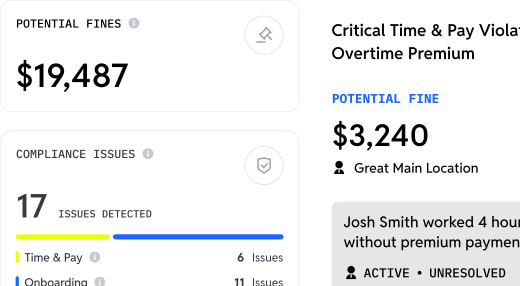
Hotels must track meal break requirements, overtime thresholds, ACA eligibility, and, increasingly, Fair Workweek predictive scheduling laws in certain jurisdictions. Some workforce-management platforms can flag scheduling, overtime, break, or recordkeeping issues for manager review, monitoring hours approaching overtime, breaks not taken, and documentation gaps. Integrated compliance management can help reduce the errors that arise from disconnected systems, though employers remain responsible for complying with applicable law.
Can hotel hiring software integrate with existing POS systems?
Some workforce-management platforms integrate with POS systems such as Square, Toast, or PAR. Where supported, these integrations may import sales and labor data for reporting, forecasting, or scheduling. When evaluating platforms, verify integrations with your specific tech stack, as the depth of data sharing varies across providers.