<img height="1" width="1" style="display:none" src="https://www.facebook.com/tr?id=395330474421690&amp;ev=PageView&amp;noscript=1">

How to Hire Quality Inspectors: Proven Steps for Restaurants & Small Business Owners

Discover expert strategies to hire quality inspectors, streamline your recruitment process, and ensure your restaurant meets the highest standards with top talent.

Restaurant manager interviews candidate to hire quality inspectors following best practices and tips.

How to Hire Quality Inspectors: A Practical Guide for Small Business Owners

Let’s face it—finding the right people to keep your business humming isn’t always a walk in the park. When you need to hire quality inspectors, the stakes are even higher. Whether you’re running a bustling restaurant, a growing franchise, or a manufacturing outfit, quality inspectors are the unsung heroes who keep standards high and customers happy. But how do you find the right folks for the job? And how do you make sure they stick around? Grab a cup of coffee and let’s break it down together.

Why Quality Inspectors Matter (More Than You Think)

Ever had a customer send back a dish or a product because something wasn’t quite right? That’s where your quality inspectors come in. Their job is to spot issues before your customers do—saving you money, headaches, and maybe even your reputation. If you ask me, investing in a strong quality control staff is a no-brainer.

But here’s the thing: the market for skilled inspectors is competitive. According to recent staffing statistics, turnover is high and the cost of replacing hourly workers can be staggering. That’s why it’s so important to get your recruitment and onboarding right from the start.

Building a Winning Quality Inspection Team

Start with a Clear Job Description

Before you even post a job ad, make sure you know what you’re looking for. A well-written job description helps attract candidates who are a good fit and weeds out those who aren’t. For tips on crafting a standout job post, check out these examples and creative tips.

And don’t forget to highlight the perks and benefits—turns out, they matter a lot. According to DoorDash’s research, offering benefits can help you attract and retain top talent in any industry.

Use Smart Screening and Interviewing

Once applications start rolling in, you’ll want to screen for both technical skills and cultural fit. That’s where tools like pre-employment assessments can help. For interview tips, try these motivational interviewing techniques and cultural fit questions to dig deeper than the resume.

And hey, don’t underestimate the power of attitude. As Harvard Business Review points out, hiring for attitude and training for skill can seriously reduce turnover.

Streamline Onboarding and Training

Ever notice how the first week on the job can make or break a new hire’s experience? A smooth onboarding process sets the tone for everything that follows. Consider using digital tools like Workstream’s hiring automation to keep things moving and ensure nothing falls through the cracks. For more on onboarding, check out these templates and industry advice.

Training shouldn’t stop after day one. Ongoing development helps inspectors stay sharp and engaged. For practical training tips, look at these methods.

Recruiting and Retaining Top Quality Control Staff

Recruiting Strategies That Work

  • Tap into digital recruiting: Platforms like Monster and Indeed can help you reach a wider pool of candidates.
  • Leverage employee referrals: According to SHRM, referral programs can bring in high-quality candidates who already understand your company culture.
  • Highlight growth opportunities: Young workers, in particular, want to see a path forward. Research shows that offering clear advancement opportunities keeps employees engaged and loyal.

Reducing Turnover and Boosting Engagement

Let’s be honest—turnover is a pain. It’s expensive, disruptive, and bad for morale. The good news? There are proven ways to keep your quality inspectors happy and productive.

  • Offer competitive pay and benefits. See how other companies stack up.
  • Foster a positive workplace culture. According to this study, job satisfaction is closely tied to retention.
  • Provide flexibility and work-life balance. Flexible schedules can make a world of difference.
  • Use technology to make scheduling and communication easier. Tools like Workstream can help reduce no-shows and last-minute callouts.

And if you’re still struggling with turnover, you’re not alone. The restaurant and hospitality industries, for example, see some of the highest rates. For a deep dive, check out this article and this cost breakdown.

Compliance, Documentation, and Legal Considerations

Here’s where things can get a bit dry, but stick with me—compliance matters. The Department of Labor requires you to keep accurate records for each employee. For a handy checklist, see the DOL’s recordkeeping guide.

Don’t forget about safety and training requirements, especially in industries like food service or manufacturing. For more on compliance and risk reduction, read this guide on high-turnover environments.

Disclaimer: This article provides general information and is not a substitute for legal advice. Consult an employment attorney for specific guidance.

How Workstream Can Help You Hire Quality Inspectors

Honestly, if you’re tired of juggling spreadsheets, sticky notes, and endless back-and-forth emails, there’s a better way. Workstream’s platform is designed for businesses just like yours. With features like automated screening, digital onboarding, and mobile-friendly scheduling, you’ll cut your time-to-hire in half and reduce costly turnover. Plus, you can manage everything from your phone—because who has time to sit at a desk all day?

Curious about how other businesses have made the switch? Check out this Dunkin’ case study or explore restaurant hiring tips.

Conclusion: Quality Matters—So Does Your Hiring Process

At the end of the day (okay, I know I said not to use that phrase, but sometimes it just fits), hiring quality inspectors is about more than filling a slot. It’s about building a team you can trust, reducing headaches, and setting your business up for long-term success. With the right tools and a little know-how, you’ll find the perfect fit—and maybe even sleep a little better at night.

Want to learn more about how Workstream can help you hire quality inspectors and build a stronger team? Take a look at these resources:

Get the latest with Workstream

Always stay current with hiring news by subscribing to our email updates

platform

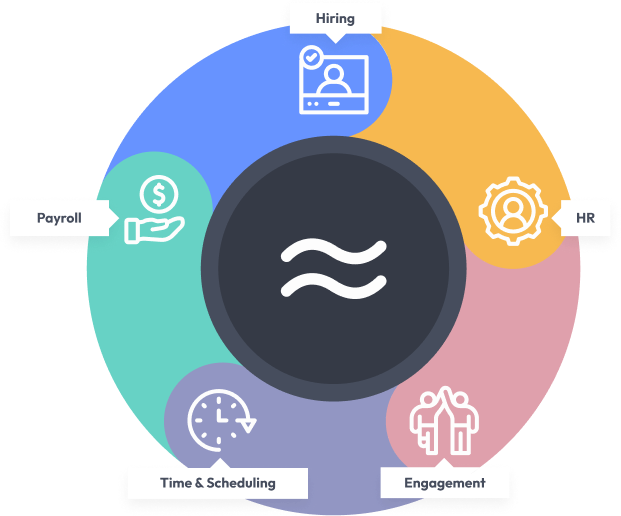
All your important HR tasks under one roof

Today’s business owners and HR teams are overwhelmed with administrative tasks: manual processes and exports, duplicative data entry, and siloed information. Workstream centralizes and simplifies people tasks so you can move fast, reduce labor costs, and simplify operations—all in one place.
Shape-1
hiring-icon-1
Hiring

Hire better quality workers, faster

HR
HR

Streamline people processes and ensure employee records are always accurate

Engagement
Engagement

Reduce turnover and increase worker engagement

Time-1
Time & Scheduling

Manage schedules and hours worked to optimize your labor costs

payroll-1
Payroll

Pay your team quickly, easily, and accurately

How we’re different

Lots of companies claim to be “all-in-one” - but aren’t a great fit for your hourly business. Here’s why Workstream stands out:

Mobile-friendly 

Mobile doesn’t just mean having an app. With Workstream, your time-sensitive people processes—from responding to candidates to reviewing shift changes and overtime alerts—happen easily on your mobile phone, so you can get things done while you’re on the go.

Built for hourly 

Whether it’s labor requirements,language diversity, meal breaks, or multiple pay rates - managing an hourly workforce comes with unique requirements. With Workstream, you’re using a system purpose-built to actually support the nuances of your hourly business.

Best in class support

When you’re trying to get a payroll run out the door, you can’t afford to wait a few days to hear back from a support team. With Workstream, our customers get a response time from our  dedicated (human) team in an average of 2 minutes. And did we mention we’ll also fully migrate your payroll data for you in about two weeks? We’re there for you, whatever you need.

resources

Become a hiring and onboarding expert.

thumb-2-1
CUSTOMER STORY

How one 26 location Burger King group streamlined staffing

unsplash_NoRsyXmHGpI-1
TEMPLATES

Download our free Hiring and Onboarding checklist

jj-customer-thumb-2-1
CUSTOMER STORY

What this Jimmy John's group did to future-proof their operations

Be smart with your hourly workforce

Book a demo

Personal Information and Sensitive Personal Information

Before we discuss the right to limit and the right to opt-out, we must first define personal information and how it relates to sensitive personal information.

Personal information is any data that identifies, relates to, or could reasonably be linked to you or your household. A few examples of personal information include:

  • Name or nickname
  • Email address
  • Purchase history
  • Browsing history
  • Location data
  • Employment data
  • IP address
  • Profiles businesses create about you, including pseudonymous profiles (“user1234”)
  • Sensitive personal information

Sensitive personal information or “SPI” is a subset of personal information, defined as:

  • Identifying information (e.g. social security number, driver’s license)
  • Financial data (e.g. debit or credit card numbers)
  • Precise geolocation (within a radius of 1,850 feet)
  • Demographic or protected-class information (e.g. race/ethnicity, religion, union membership)
  • Biometric and genetic data (e.g. fingerprints, palm scans, facial recognition)
  • Communications and content (e.g. mail, email, text messages)
  • Health and sexual orientation (e.g. vaccine records, health history)

Right to Opt-Out

Californians have the right to opt-out of the sale and sharing of their personal information. That means you have the right to opt-out of the sale of your personal information to third parties (e.g. data brokers, advertisers). You also have the right to opt-out of the sharing of your personal information to prevent the targeting of ads across different businesses, websites, apps, or services.

CCPA-covered businesses must provide a link to allow you to exercise this right. It is usually found at the bottom of a webpage and will say “do not sell or share my personal information” or “your privacy choices.” Sometimes businesses offer privacy choices through a pop-up window or form

To opt-out of the sale and sharing of your personal information, click on the link or use the toggle provided by the business and follow the directions. Doing this on every website you visit can feel burdensome, but to ease the burden you can automatically select your privacy preferences for every website by using an opt-out preference signal, or OOPS for short.

An OOPS is a user-friendly and straightforward way for consumers to automatically exercise their right to opt-out of the sale and sharing of their personal information with the businesses they interact with online. An OOPS, such as the Global Privacy Control. It can either be a setting on your internet browser or a browser extension. With an OOPS, consumers do not have to submit individual requests to opt-out of sale or sharing with each business.

Right to Limit

Californians also have the right to direct businesses to limit the use and disclosure of their sensitive personal information.

Businesses covered under the CCPA must provide a link on their website that allows you to request the limiting of your SPI, if they plan on using it in certain ways. That link will also typically be at the bottom of a webpage and will say: “limit the use of my sensitive personal information” or “your privacy choices.” Once you send this request, the business must stop using your SPI for anything other than to:

  • Provide requested goods or services
  • Ensure security and integrity
  • Prevent fraud
  • Maintain system functionality
  • Comply with legal obligations

Bringing it Together

In summary, the CCPA gives you the right to opt-out of the sale and sharing of your personal information and gives you additional rights to further limit the use and disclosure of your sensitive personal information.

When you exercise these rights together, you exert greater control in protecting your personal data which is important for your identity, safety, and financial health.

If you are on a business’s website and you can’t find the links to exercise your rights, remember to check their privacy policy. The privacy policy should tell you how you can exercise your rights under the law.

If you find your rights being violated, you can submit a complaint to CalPrivacy.

Next in the LOCKED series, we will explore the right to correct and right to know. Follow us on social media to get live updates or check back in one week for the next post.

Essential

Required to enable basic website functionality. You may not disable essential cookies.

Targeted Advertising

Used to deliver advertising that is more relevant to you and your interests. May also be used to limit the number of times you see an advertisement and measure the effectiveness of advertising campaigns. Advertising networks usually place them with the website operator’s permission.

Personalization

Allow the website to remember choices you make (such as your username, language, or the region you are in) and provide enhanced, more personal features. For example, a website may provide you with local weather reports or traffic news by storing data about your general location.

Analytics

Help the website operator understand how its website performs, how visitors interact with the site, and whether there may be technical issues.

Right to Limit Use of Sensitive Personal Information

You also have the right to limit how we use sensitive personal information (such as precise geolocation, financial data, etc.).

Your preference has been saved. We will not sell or share your personal information.